
In memoriam: KUH Medical Library
The Kuopio University Hospital (KUH) Medical Library served a wide range of users for over 60 years. In cooperation of the university and the hospital, it evolved from the provincial hospital’s book collection into a support pillar for research, teaching, and patient care. This blog post recounts the key stages in the library’s history, its significance for medical and healthcare professionals and students, and the decision to cease operations in the spring of 2026.
From provincial hospital book collection to central hospital library
The exact year when some form of library activity started at Kuopio Provincial Hospital, which later became Kuopio Central Hospital (KUKS), then Kuopio University Central Hospital (KYKS), and eventually Kuopio University Hospital (KUH), is unknown. Nevertheless, the books and journals of the provincial hospital, founded in 1794, were transferred to KUKS. KUKS was established on paper in 1947 but received its first patients only in December 1958; its official starting year is set as 1959.
Library services became professionalised in 1961. Prior to this, doctors participated in the selection and handling of literature, while periodicals were managed by administrative staff. In 1959, the chief physician of KUKS proposed to the hospital board that a part-time position be created for a person with library experience. This post was formally established in 1961 with qualifications requiring a matriculation certificate and library training, with an estimated workload of 10 hours per week. By 1964, the library held 160 scientific journals and 3,000 books.
Thus, the library, later known as KUH Medical Library, was born when collections, premises, staff, and services began to exist.
The hospital library as a foundation for the university library
The Act establishing University of Kuopio (then called ”korkeakoulu”, i.e. college or higher education institution) was passed by parliament on 4 March 1966 and confirmed by the president on 25 March 1966. After complex decision-making, medicine was chosen as the main field of study, and the collections of the central hospital library constituted the foundation of the medical university library. The basic agreement between the Kuopio central hospital district and the University of Kuopio was signed on 17 February 1972. KUKS became a university central hospital (KYKS), and according to the law on university central hospitals, the library’s management fell under the university.
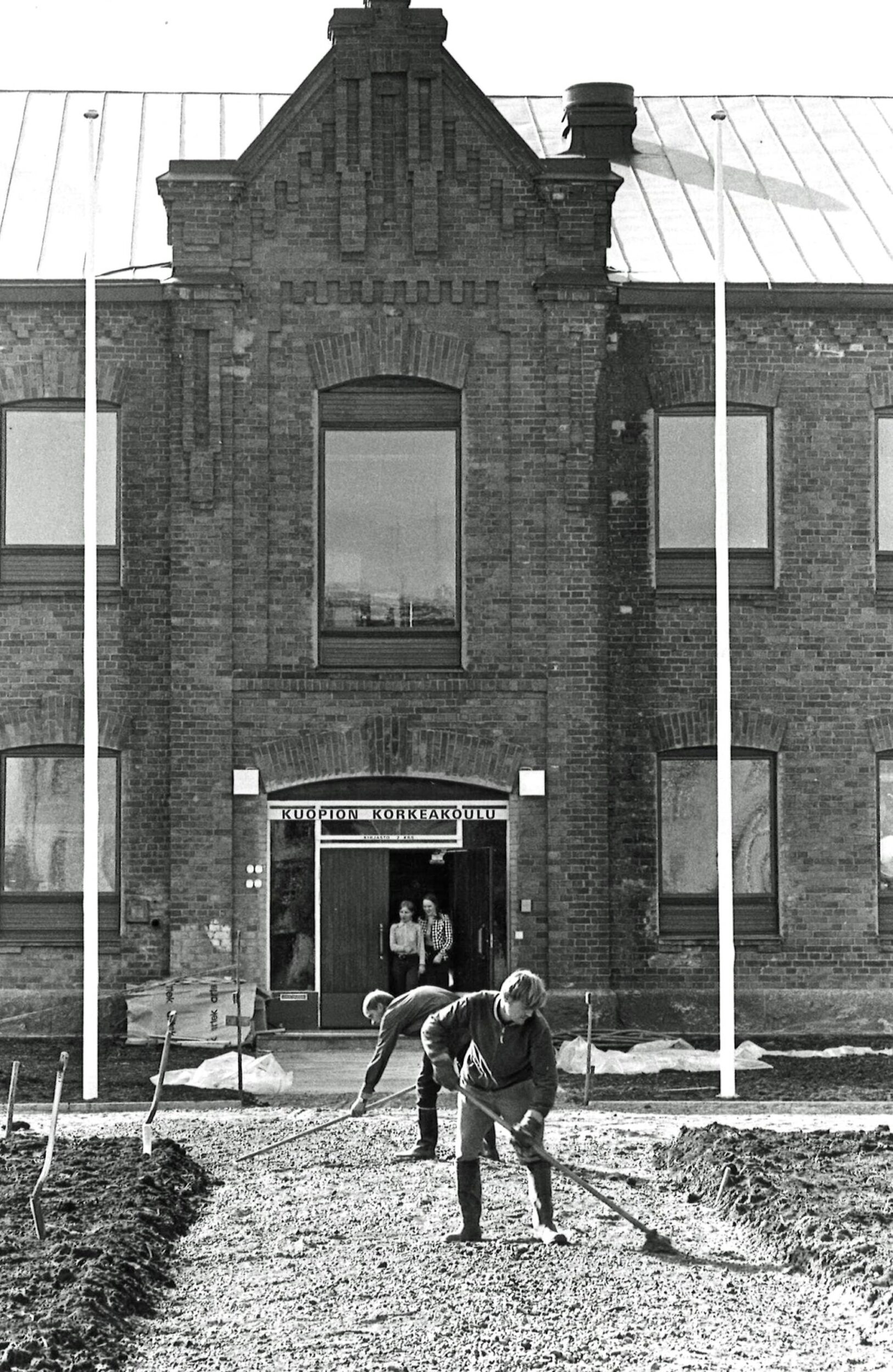
At the time of the university’s establishment, it was agreed that the hospital’s library would serve as the clinical medical library of the University of Kuopio due to its already strong collections of medical journals and other literature. The preparatory committee had planned 44 posts for the central university library and three unit branch libraries, but in reality, there were only five posts in the library until 1977, and when the college (in Finnish ”korkeakoulu”) became a university, there were 12 posts.
During the transition in 1972, KYKS library staff hours were raised to 20 hours per week. In 1974, the university established a library assistant post for the clinical medical branch library, to which the hospital’s librarian was transferred. Officially, the status of the central hospital library was still unclear, as it was unknown whether the central hospital district or the university would cover acquisition and maintenance costs. The hospital board later decided to include the library’s acquisition budget in the hospital’s budget.
From clinical medical branch library to KYKS medical library
By this stage, the hospital subscribed to over 200 medical journals. It was decided that approximately 300 journals would be housed in the university’s clinical medical branch library for loan over three to five years, after which they would be transferred to the university library’s storage. Volunteers moved older material from KYKS to the former Military school on Puistokatu, where the university library initially operated: 123 journals totalling 854 volumes, alongside outdated books and duplicates amounting to 50 shelf-metres. Due to initial enthusiasm, formal procedures were neglected, and the transfer of literature owned by the central hospital was approved by the hospital board only retrospectively in 1975.
A separate agreement on library services was not concluded between the university and the hospital, as the operations were governed by the Act on University Central Hospitals. According to it, ”The remuneration of the university’s office and office holders in the central hospital is carried out by the university. The university shall also bear the cost of the acquisition and treatment of the central hospital library and the cost of the equipment to be acquired for the purpose of scientific research or teaching.”
In the early 1980s, the library of the University of Kuopio had settled into its planned locations in Savilahti. Snellmania housed the central library, where the acquisition of literature, cataloguing, interlibrary services, and the course book collection were centralised, along with reference works and literature in the natural sciences and environmental hygiene. The departmental library in Canthia, which was the first to open, contained literature in pharmacy and dentistry, as well as in the social sciences and medicine. Clinical medical literature was collected in the KYKS medical library.
In 1985, the university library gained a second post for an information specialist. The area of responsibility for this post was medical information services, and the position was based at the KYKS medical library. Six years later, the KYKS library had three university posts, in addition to which a library assistant was employed on a contractual basis; the salary costs for this position were paid by KYKS to the university.
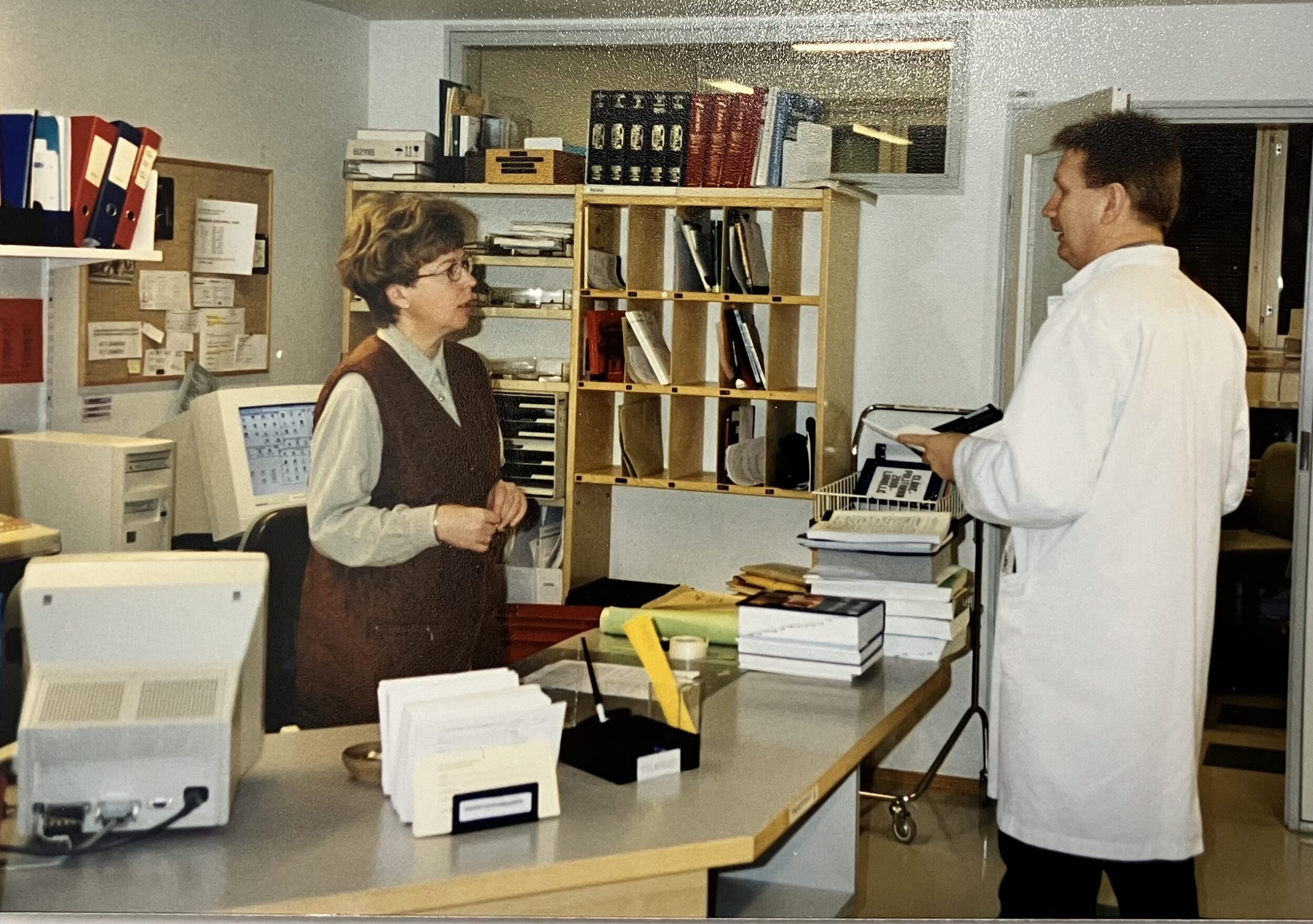
Collections grew rapidly: in 1973, the KYKS medical library had 3,487 books with 3,482 loans; in 1979, 5,357 books with 5,402 loans. The number of journal volumes increased from 426 in 1973 to 539 in 1979. New books acquired numbered 987 in 1982, 1,174 in 1984, 1,157 in 1987, and 1,300 in 1991. Number of photocopies sent rose from 120,000 in 1984 to over 210,000 by 1991.
For comparison, there were 7,022 loans in 2006 and 8,054 in 2009. In 2010, there were 687 borrowings, 820 books were acquired, and there were 205 subscriptions to journals, of which 168 were still in print.
The first written cooperation agreement
Each of the five Finnish universities with medical education and university hospitals has arranged library services slightly differently. Universities operate under the Ministry of Education and Culture, while hospitals were under the Ministry of Social Affairs and Health. Most universities have faculty libraries also serving hospital staff, but in Kuopio, there were never faculty libraries; instead there was and is one university library, of which the KUH library was always a part. This cooperation was financially prudent and guaranteed comprehensive library services to both organisations. It was necessary to overcome administrative barriers so that medical and other health care professionals, researchers, and students would receive the best possible services with limited resources.
During the financial difficulties of the 1980s and 1990s, marked by soaring journal prices and repeated university budget cuts, collaboration with the hospital was a lifesaver for medicine in Kuopio, although other fields struggled. The situation was the opposite, for example, in 2006, when the hospital district’s funding for the library decreased to 320,000 euros, significantly less than the previous year’s 425,000 euros. Acquisitions were focused on online materials, meaning participation in the costs of e-journal packages subscribed to by the university. After a couple of years, the budget was restored to approximately 430,000–450,000 euros, where it remained for the duration of the library’s existence.
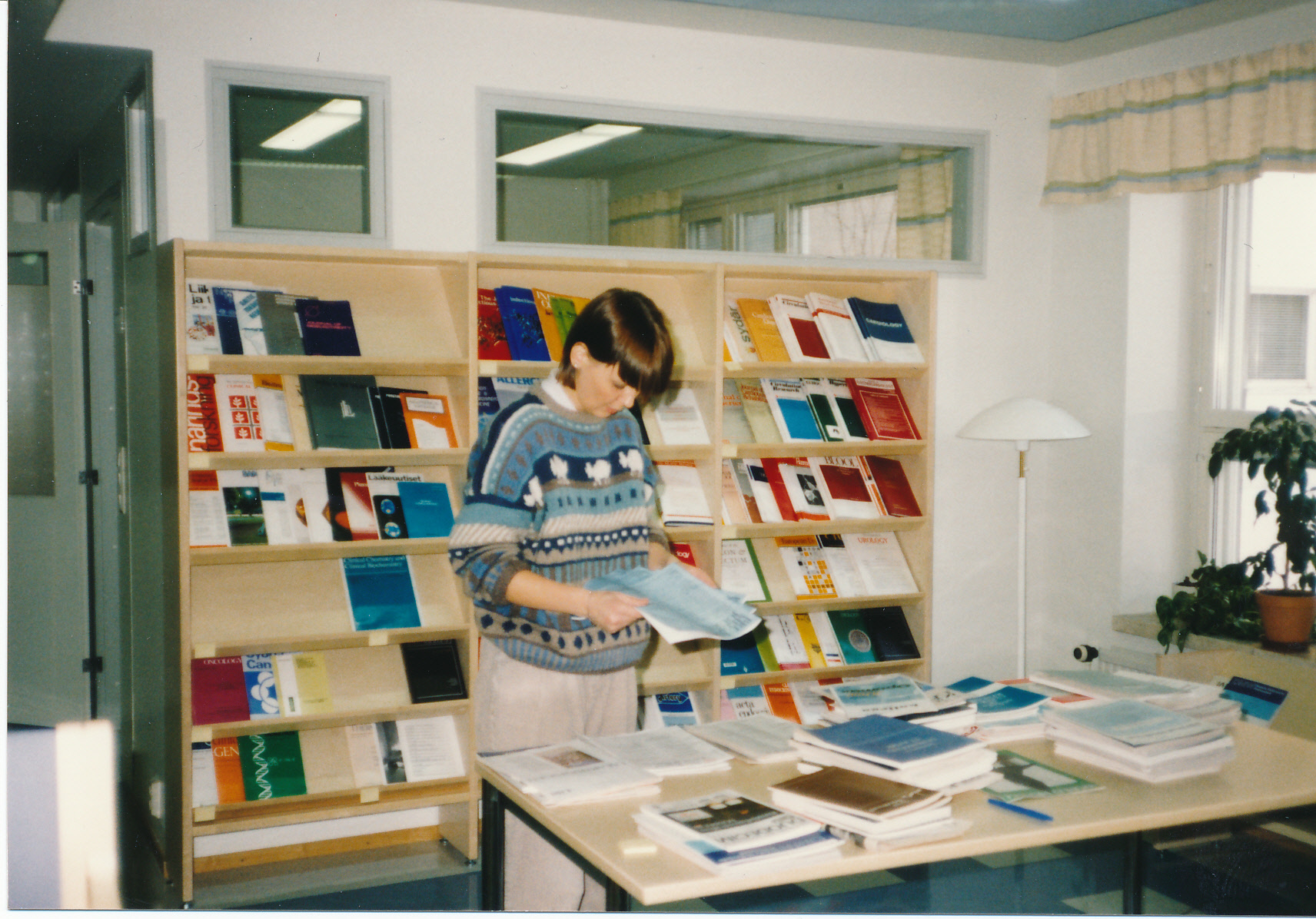
The first separate, written agreement concerning the operation, provision, and funding of KUH Medical Library between the university and the North Savo Hospital District was signed in 1992. University central hospitals had by then changed according to a new specialised medical care law, and KYKS had become KUH. The law stipulated that the hospital district must provide adequate premises, fixed equipment, and devices necessary for education and research use by universities or other authorities. KUH was obligated to provide premises with fixed furnishings for the library, while the university was responsible for the library’s upkeep.
The KUH library under this agreement was also the hospital library—which was exceptional, as other university hospitals had separate university medical libraries and hospital libraries under different administration. This required a more detailed agreement on operations and funding.
The university library board approved the draft agreement in January 1992. The draft then was reviewed by the Faculty of Medicine, university board, hospital medical chief committee, hospital board, and hospital district executive board. Following these multiple approvals, the final agreement was signed on 25 August 1992 by the hospital district and university hospital representatives. The agreement defined KUH Medical Library as the clinical medical and professional library for both university and university hospital. The hospital was to provide sufficient space, furniture, equipment, and literature needed for patient care. The university was responsible for financing and acquiring scientific materials for research and teaching. Management of the scientific library was assigned to the university. Detailed staffing arrangements were to be agreed separately. In the 1990s, KUH funded one library assistant and one librarian. By the early 2000s, five university employees worked at the KUH library, with three salaries covered by KUH and one directly employed by the hospital district.
Subsequent cooperation agreements
A new agreement on jointly produced library services between KUH and the University of Kuopio was made in 2006. This included wording from new FinELib agreements on electronic materials, recognizing that the university represented the university hospital and that both parties were responsible for ensuring their staff knew instructions and regulations regarding electronic materials.
In 2009, another new agreement was necessary due to the 2010 merger of the University of Kuopio and University of Joensuu into the University of Eastern Finland (UEF). Signed on 3 February 2009, it described for the first time the dual organisation of KUH Medical Library.
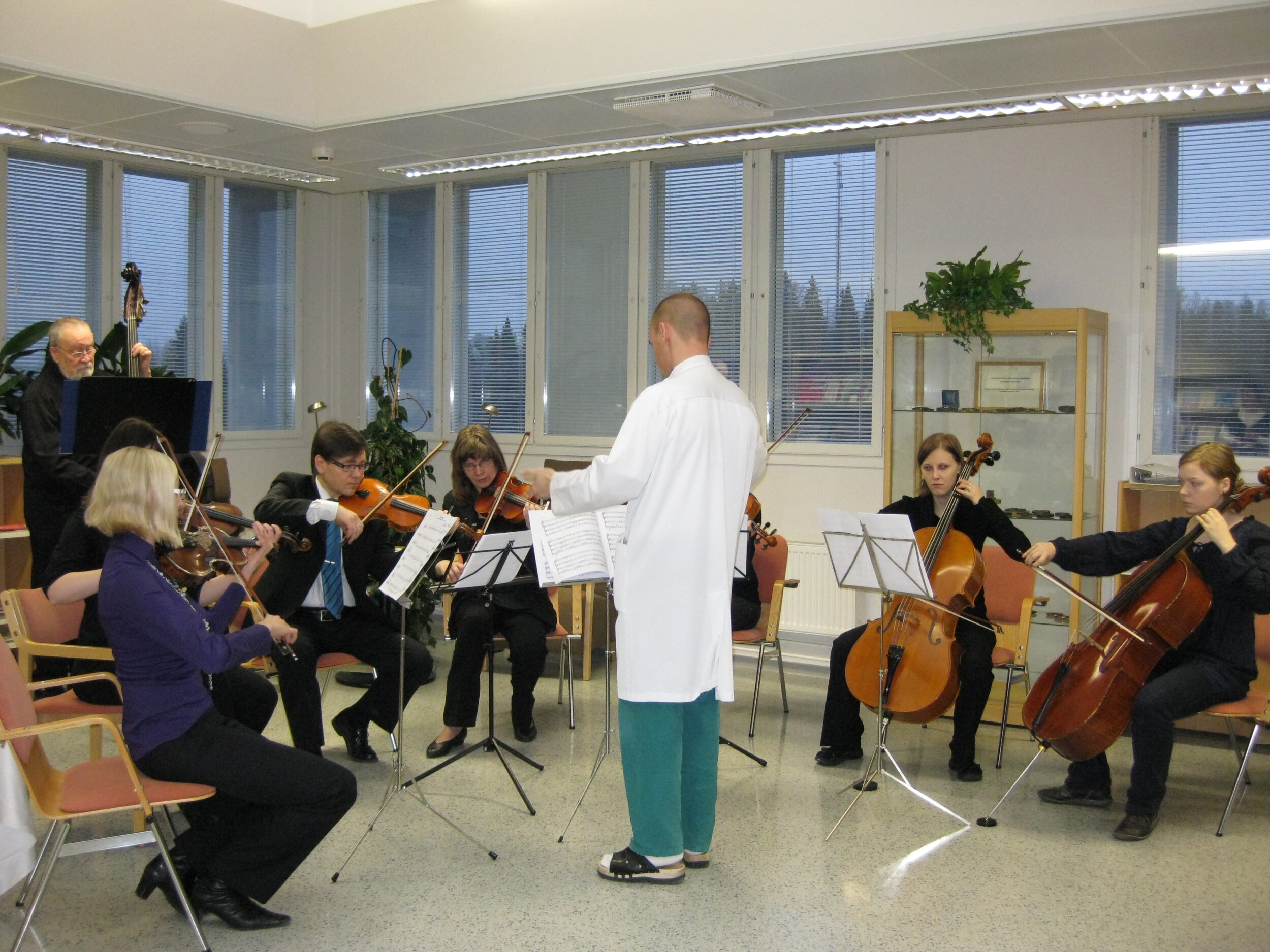
At that time, the library had five university-employed professionals (information specialist, librarian, and three library amanuenses) and one library assistant employed by the hospital district. The hospital’s library operations were directly under the chief medical officer, while university activities reported to the library director. The KUH library’s information specialist served as the deputy director of the university library and line manager for other library staff. Upon UEF’s founding, the information specialist became the KUH Medical Library’s head of services. KUH library was one of the six service entities of UEF library, in addition to customer, collection, online resource, training and information, and internal services.
A new agreement became relevant in 2018 because UEF was anticipated to partner with the then-upcoming social and health services reform, which was based on regions. “However, KUH has the right to freely transfer the entire agreement to the newly established region.” That reform was ultimately not implemented.
The final agreement concerning the KUH Medical Library was signed on December 15, 2022. Due to the realized social and health services reform based on wellbeing services counties, the The wellbeing services county of North Savo became UEF’s contractual partner. The agreement still included a clause requiring mutual commitment to finance and maintain the KUH Medical Library with their respective shares and to ensure sufficient operational conditions despite changes in financial circumstances. To secure services, both parties committed to maintaining at least the funding and service levels consistent with the 2023 budget.
Training and guidance
Guiding and teaching patrons became increasingly important as the collections shifted more and more to electronic formats and customers became more independent in both information retrieval and library use. For example, the most important medical database, PubMed/MEDLINE, became openly searchable as early as 1997, but on the other hand, the KUH Medical Library only acquired a self-checkout machine in 2013.
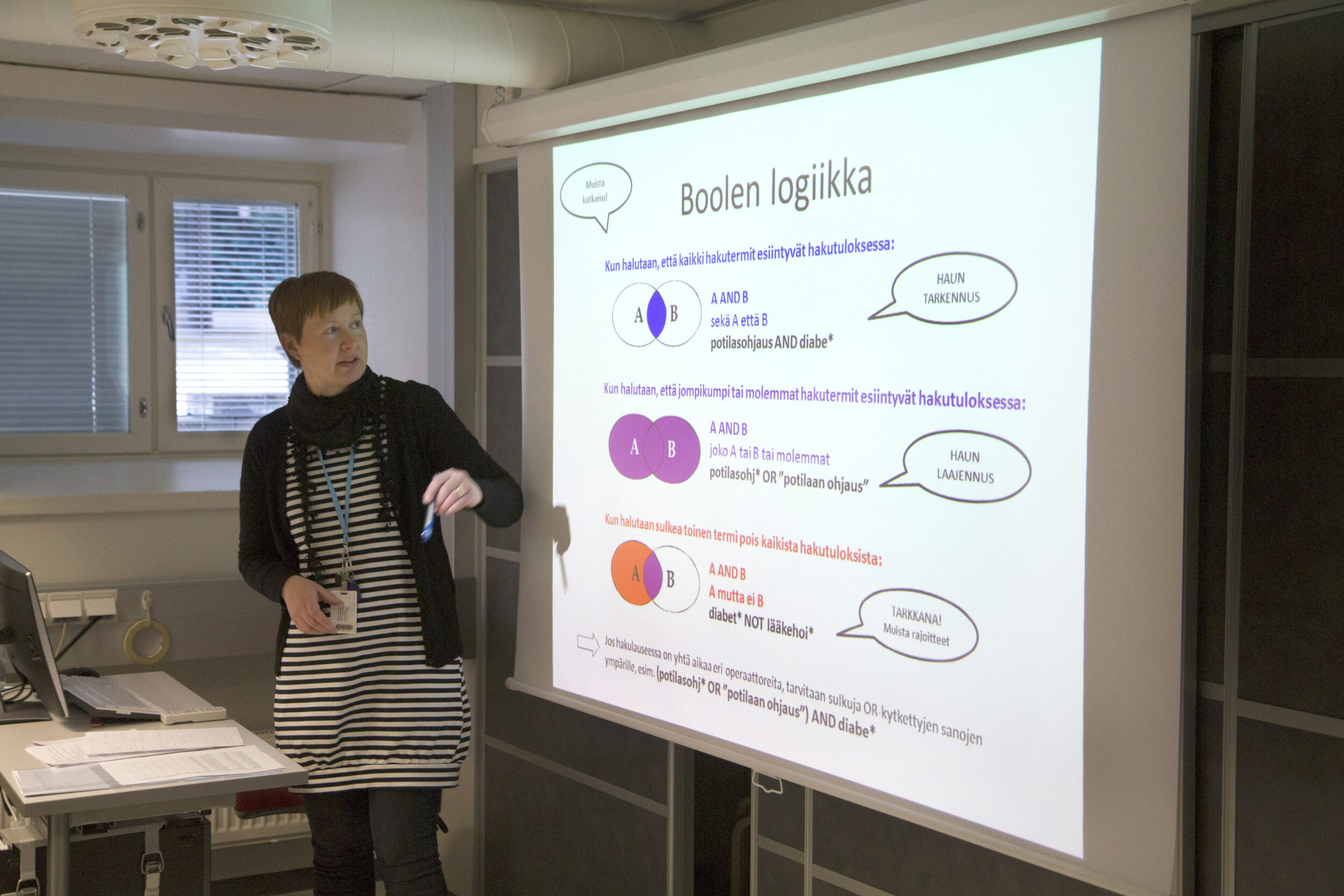
In addition to the fact that half of the staff of the KUH library taught on the university library’s information retrieval courses, training in information retrieval and reference management was also provided for hospital staff. For example, in 2007 two-hour sessions were held in the hospital lecture hall, nonstop information briefings in the library meeting room, more thorough training sessions in the hospital IT training classroom, as well as tailored guidance in the premises of work units and wards. In that year, a total of 148 people participated in the training, including nursing staff and physicians as well as administrative personnel. In 2009, there were 47 hours of training at the hospital and 233 participants. The most extensive training was the information retrieval component of the course ”Making evidence-based nursing visible at KUH”. In this context, the information specialist was invited to become a member of the KUH Nursing research council. In 2010, there were 64 hours of training at the hospital and 690 participants, meaning that the number of teaching sessions was more than one third higher and the number of participants almost twice as high as in the previous year. Alongside group-based training sessions, hospital staff, like university staff, also had the opportunity for individual information retrieval guidance. Guides and guidelines were also developed to support independent customer information retrieval. Information searches were also conducted as a service.
The increasing competence requirements of the staff necessitated further training. The staff of the KUH library participated actively in internal library training, national seminars, and international conferences, also with their own presentations and posters, and wrote journal articles.
Facilities and equipment
The hospital library operated for a long time in cramped quarters that did not include any staff workrooms. As a clinical medicine library for the university, it gained somewhat more space, but all the staff worked around the same table, and there was no privacy for clients. In 1984, it was decided to renovate a 200-square-metre space on the hospital’s ground floor near the main lobby for the library, but the first proper library premises were not opened to clients until 1988. Although the new facilities were impressive compared to the previous ones, they were already inadequate when opened.
The following year, the university library proposed that the KYKS development plan for 1990–94 include acquiring a larger space for the library. However, it was not until 1996 that the hospital care committee suggested to the hospital administration that one million Finnish marks from special government grant funding be used to relocate the library to the site of the cafeteria. The space requirement was estimated at 500 square metres. The opening ceremony of the new library was held on 16 December 16 1998. The hospital covered the renovation of the premises and furniture, while the university provided the equipment. Fifteen microcomputers were acquired for client use. Network connections to the university network were also established to give hospital staff access to databases and other electronic materials.
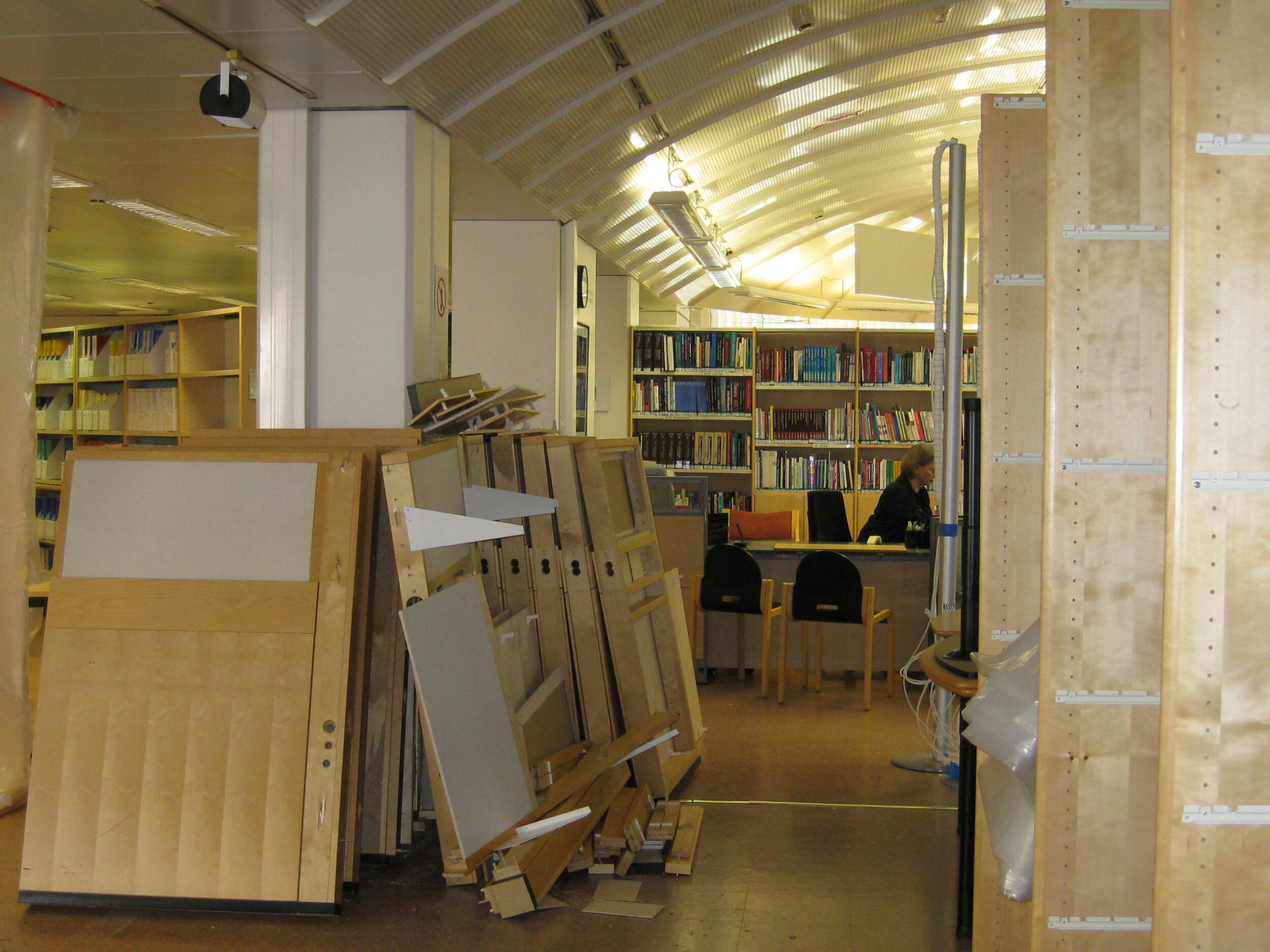
By the mid-2010s, it was clear that KUH’s library premises were no longer optimally located for the hospital’s or library’s needs. Multi-year planning began for relocation. A big part of the library space (reading room and groupwork room) was repurposed in 2011–12 before a solution was found. Collections were cut completely up-to-date, so they could fit in a smaller space than before, and equipped with RFID tags in 2012.
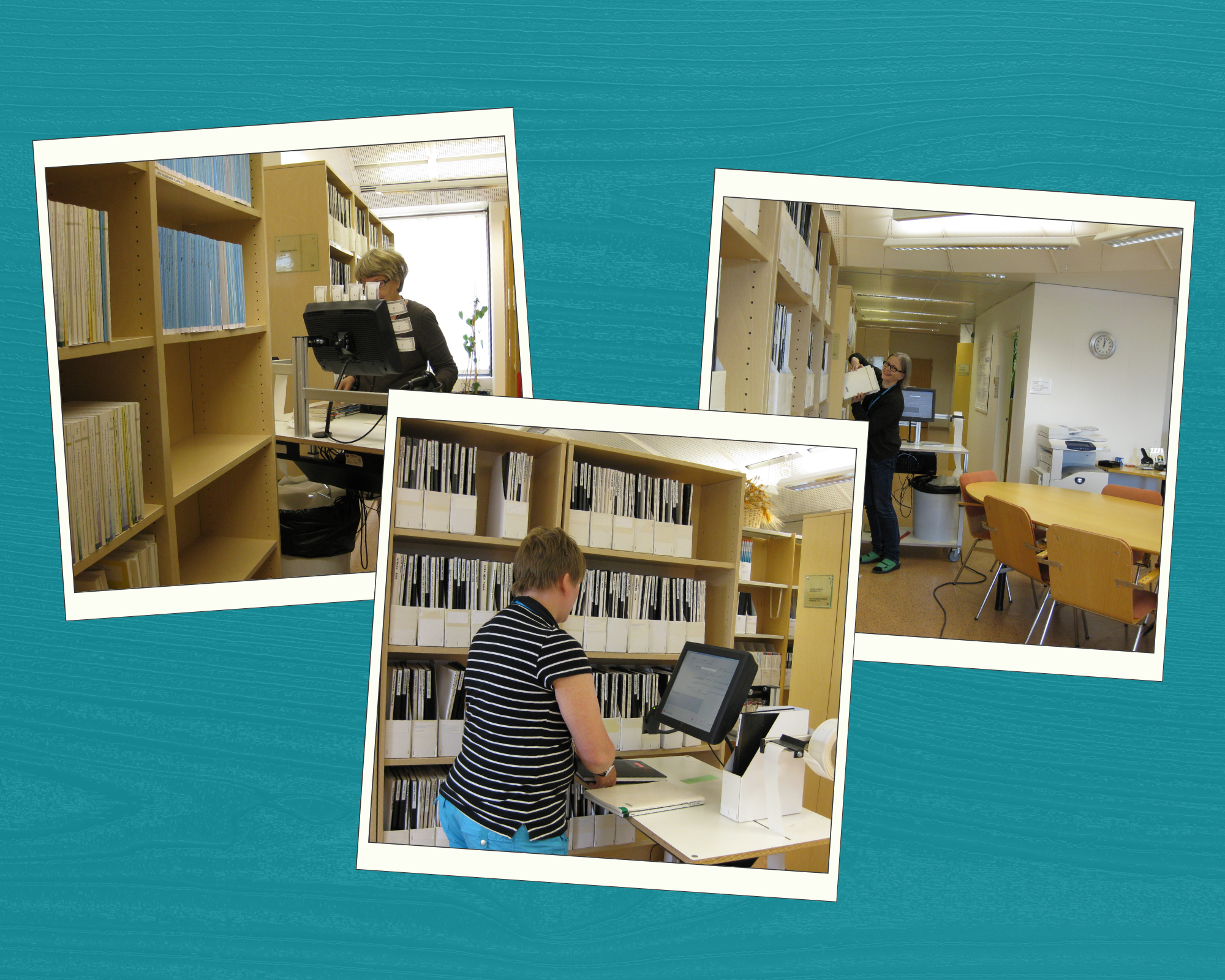
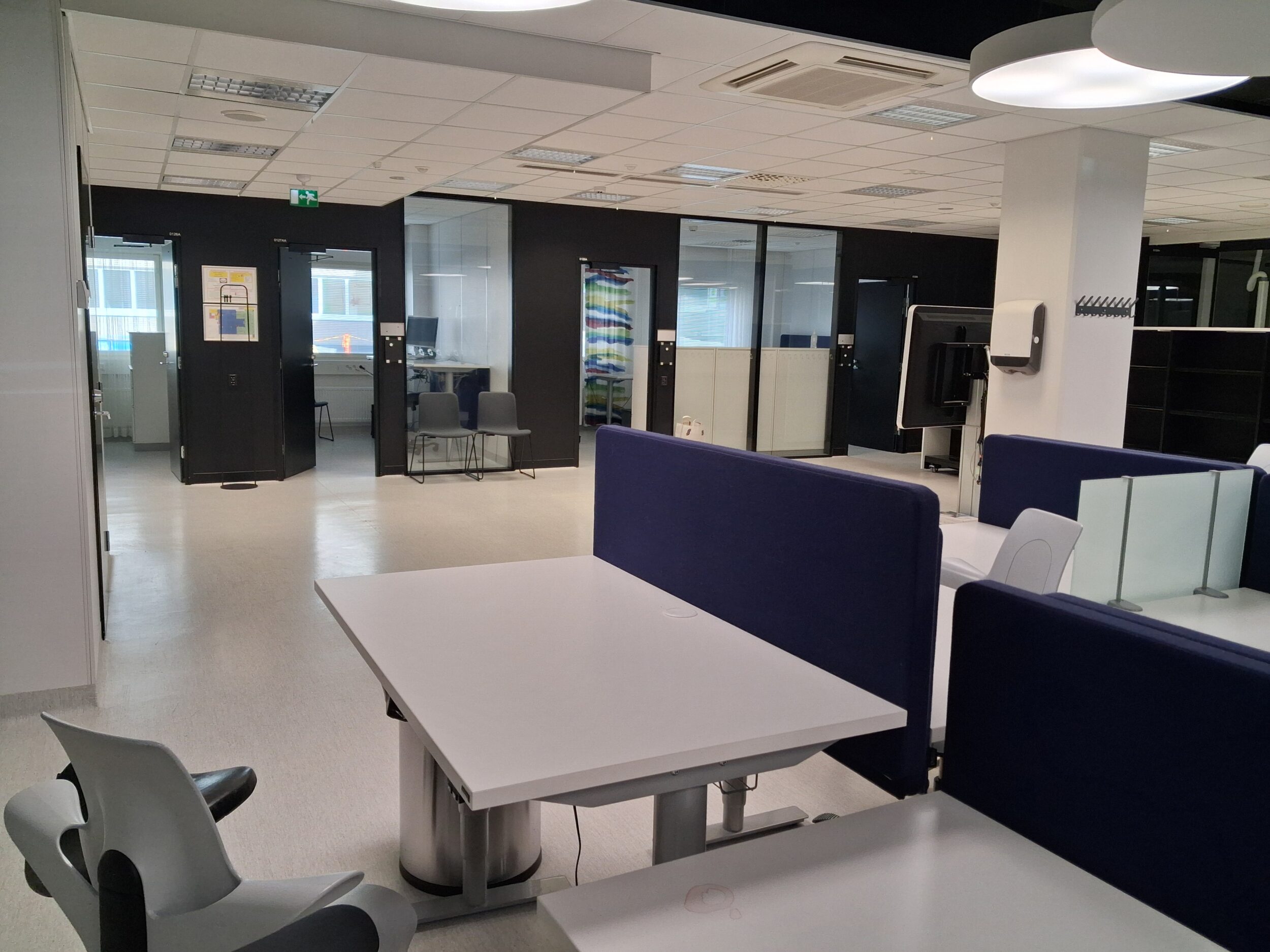
In 2015, the library was relocated to newly renovated, smaller but more functional premises on the hospital’s ground floor. There is more information about the move and the changes in this series of blog posts:
- [KUH Medical Library is moving – part 1] (briefly in English)
- [KUH Medical Library is moving – part 2] (only in Finnish)
- KUH Medical Library is moving – part 3: DELAY
- KUH Medical Library is moving – part 4: Shelves
- KUH Medical Library is moving – part 5: Ready to open
The bechmarking project, with site visits in 2014, also provided inspiring ideas for the new space.
In January 2016, the library reopened after a short closure in a modern, comfortable, and peaceful space near medical teaching facilities, becoming a popular study place. Notably, from at least the early 1990s, both hospital staff and clinical-phase medical students had access to the library even outside service hours, well before the advent of self-service or 24/7 libraries.
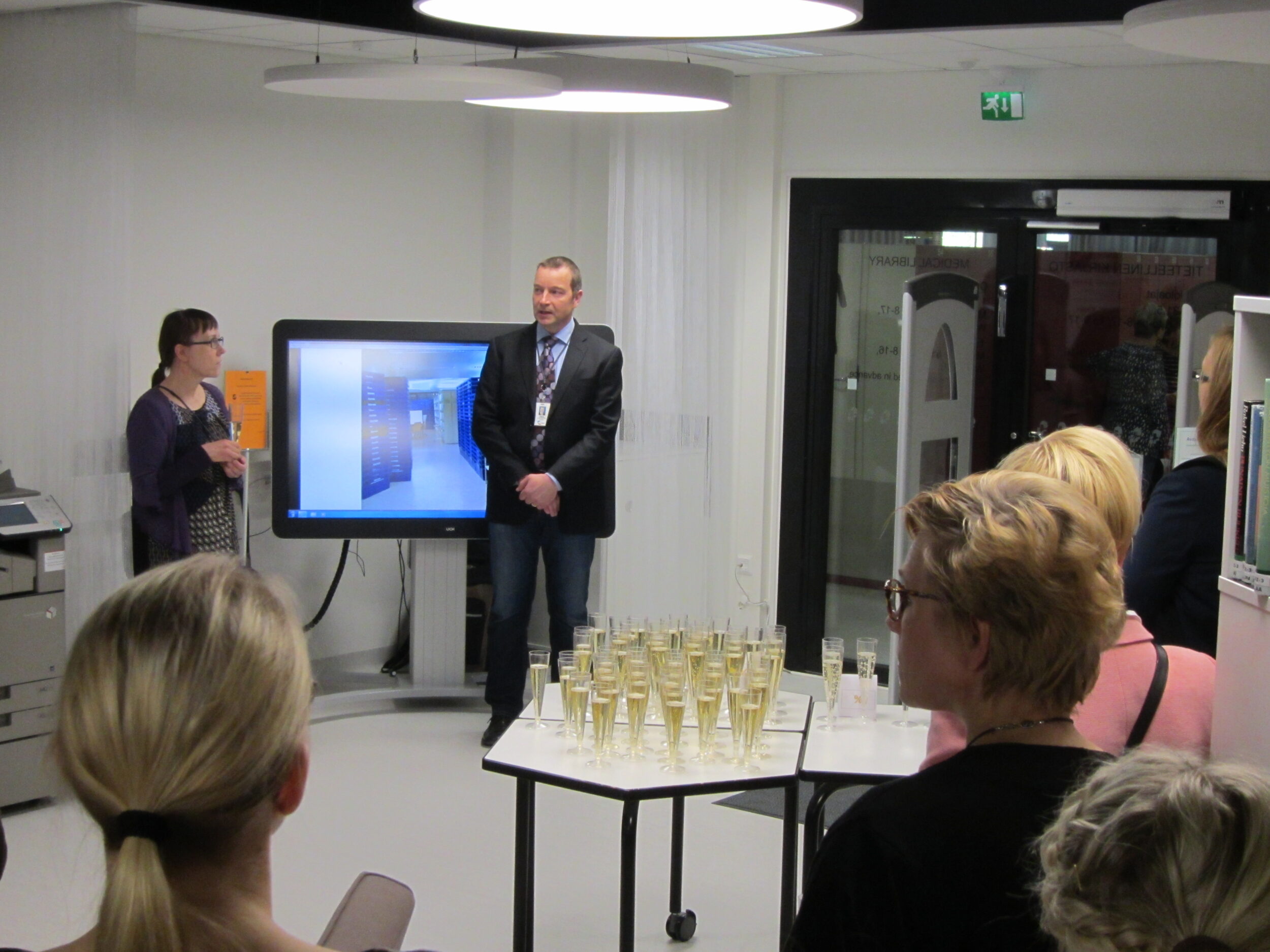
Closure decision
In 2026, the wellbeing services county of North Savo terminated the library cooperation agreement, effective at the end of April 2026. KUH Medical Library premises closed permanently on Thursday 2 April 2026. It will be missed by many.
Tuulevi Ovaska, Senior information specialist
Training and information services
(Librarian 2003-2005, Information specialist & Deputy director, 2005-2009, Kuopio university library, KUH Medical Library;
Head of services, 2010-2016, Senior information specialist 2017-, UEF Library, KUH Medical Library)
Published sources of information
Haapanen M, Kultamaa P, Ovaska T, Salmi K. Reducing library space can promote the shift from storage of print-collections towards a learning-centre without limiting the access to information. Library management. 2015;36(8/9):685–9
Halkoaho A, Luoto K, Ovaska T, Saarti J. Supporting the medical research and daily work at the hospital – analysing the library and information services at the Kuopio University Hospital. Journal of the European Association for Health Information and Libraries. 2018;14(1):9-14.
Hannula S. Lasaretista yliopistolliseksi sairaalaksi : 200 vuotta sairaalatoimintaa Kuopiossa : Kuopion lääninsairaala, Kuopion keskussairaala, Kuopion yliopistollinen keskussairaala, Kuopion yliopistollinen sairaala. Kuopio: Pohjois-Savon sairaanhoitopiiri; 1994.
Huuhtanen R. Tiedelaakson tiedonhakua : Kuopion yliopiston kirjaston synty ja ensimmäiset vuosikymmenet. Kuopio: Kuopion yliopisto; 2006.
Luoto K, Ovaska T, Saarti J. Yliopistosairaaloiden kirjasto- ja tietopalveluita ei tule unohtaa SOTE-uudistuksessa. Sosiaalilääketieteellinen Aikakauslehti. 2018;55(2):172-4.
Ovaska T, Saarti J. Jointly Effective – making ends meet in the KUH and UEF library. Journal of the European Association for Health Information and Libraries. 2011;7(2):3-8.
Other sources of information
- The intranet of UEF Library
- The photographs of UEF Library
- My own files
- Oral sources