
40 years of library services in the Carelia building on the Joensuu campus, part 3
The Joensuu Campus Library of the University of Eastern Finland is located in the Carelia building, which turned forty years old in 2025. Over the decades, the library’s facilities and services have undergone changes. Now we are once again on the threshold of a new transformation: the campus development project will bring new actors into the building.
In the upcoming semester, we will celebrate the forty-year-old library space with a series of blog posts. We will also share information about the changes that will come to the facilities as part of the campus development project.
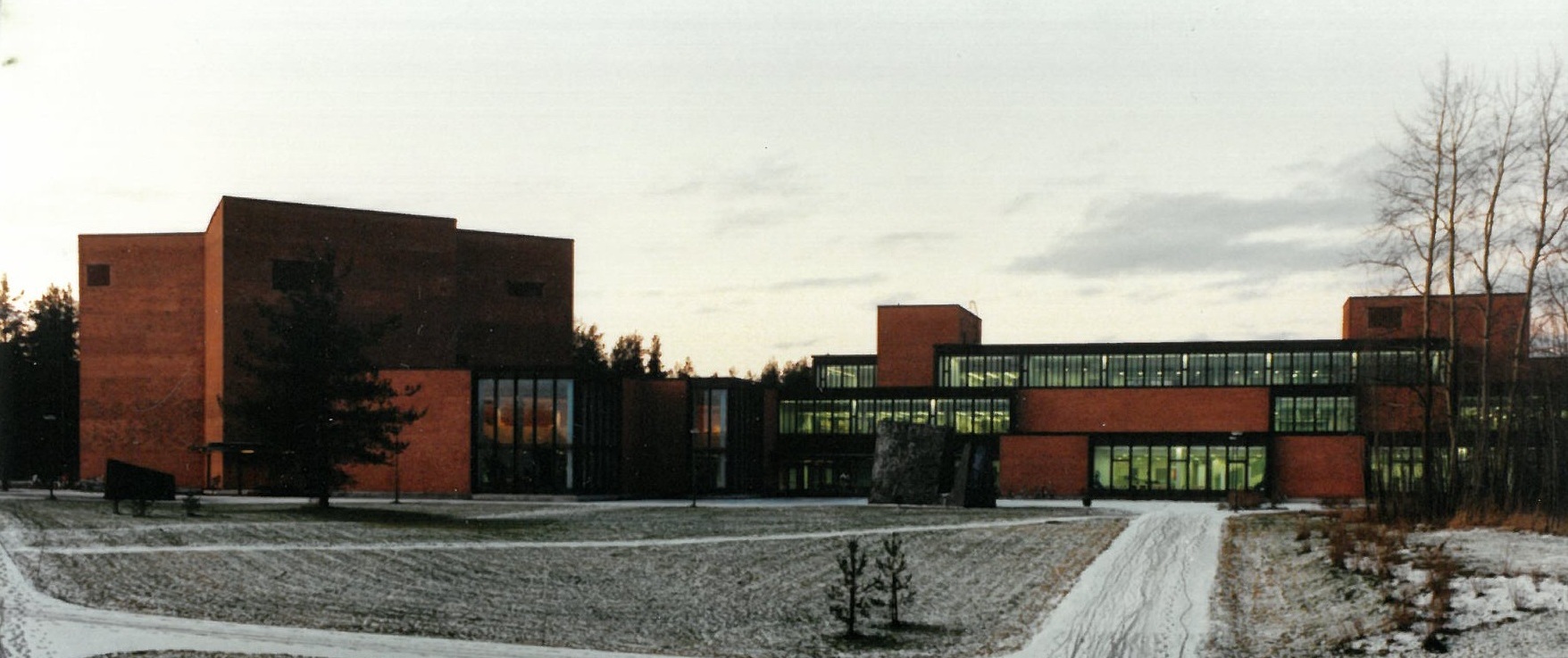
From spaciousness to crampedness
The growth of the printed collections at the University of Joensuu’s main library was rapid during the 1990s. However, acquisitions purchased for the main library decreased by as much as half compared to earlier years. In 1987, the university had transferred the decision-making authority for the use of research literature funds to academic departments, and many of these units purchased publications primarily for their own departmental collections. Only the funds for course books and so‑called general literature remained within the library’s budget. Cuts to university funding during the recession years of the early 1990s also partly explain the decline in purchased acquisitions.
The fact that the collections nevertheless continued to grow steadily was largely due to factors other than purchased acquisitions. Previously unprocessed storage materials could now be catalogued and made available for use. In addition, in 1981 the library had been granted partial legal deposit rights, shared with the Library of Parliament, which resulted in a comprehensive inflow of new domestic publications into the collections. Shelf metres also increased thanks to exchange publications received from other universities and research institutes, as well as various donations.
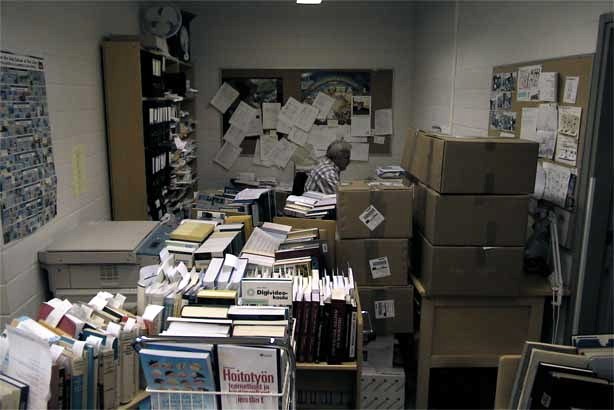
The growth also had its downside. The Carelia building had been designed mostly in the 1970s, a time when the future expansion of the university and the resulting need for additional library space could not be foreseen. Higher rows of shelves had to be added to the Carelia library halls in order to fit all the material within reach. The spacious feel that had originally characterized the halls gradually disappeared.
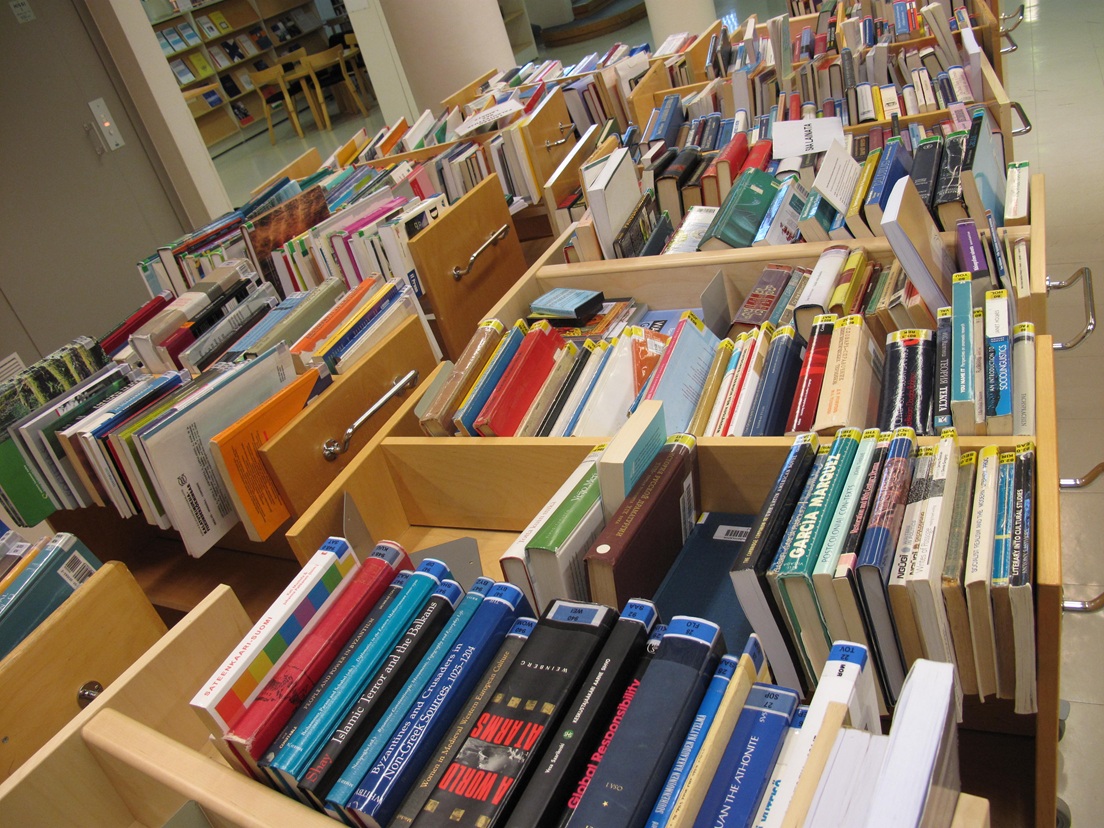
The additions to the shelves and the denser use of shelving space were not, in the long run, sufficient to solve the lack of space. The library was forced to take civil shelters and storage facilities outside the Carelia building into use. Altogether, the collections were placed in six separate storage locations, many of which were impractical for the preservation of library materials. According to the 1997 annual report, more than one-third of the main library’s materials were already housed in temporary off-site storage facilities.
The library obtained temporary storage space for legal deposit material in the new building of the Joensuu Regional Archives (Joensuun maakunta-arkisto), which was completed on the campus in 1991. A more permanent solution for the legal deposits was achieved in 2000, when the university rented a storage hall from the Foundation for the Promotion of Karelian Culture (Karjalaisen kulttuurin edistämissäätiö). The building, located outside the campus, was equipped with appropriate office facilities, and space‑saving mobile shelving was installed in its spacious storage halls.
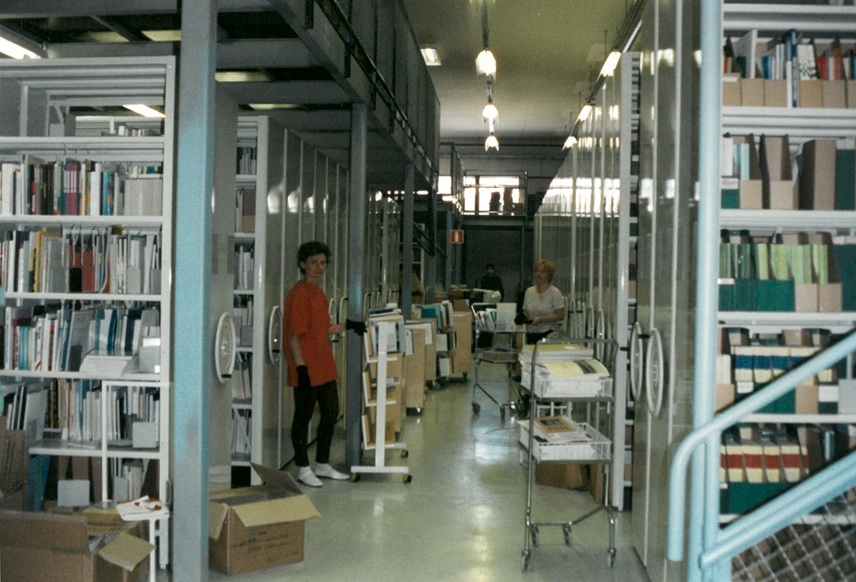
For materials other than legal deposit collections, the library had hoped for an extension to be built onto the end of the Carelia building, but the university abandoned this plan. The library eventually received a functional separate storage space in the Metria building on the campus. The mobile-shelving storage facility, providing 5,400 metres of shelf space, was taken into use in April 2009. During the year, approximately 9,000 books, an equal number of serial publications, and around 300 journal titles were transferred there.
The Metria facilities were also needed because, during the first decade of the 2000s, the university’s departments had begun to phase out their own book and journal collections. After the completion of the Aurora II building in 2006, the disciplines that moved there reduced their office‑library holdings. The departmental library of physics and mathematics was closed in 2009, and the computer science departmental library, located in the Joensuu Science Park, in 2011. Most of their materials were transferred to the main library.
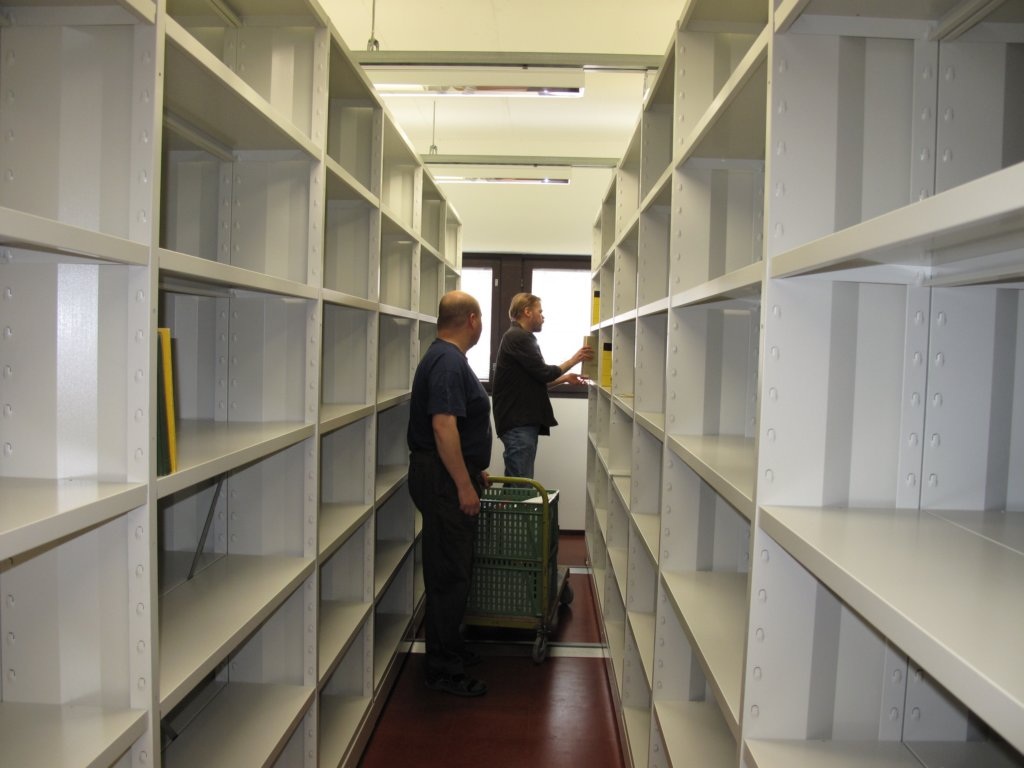
The library’s most severe space issues had been resolved through the new storage solutions. However, the digitization of information resources was already bringing winds of change to collection work and spatial planning. The first electronic journals had been subscribed to in 1997, and in the same year the national consortium for electronic resources, FinELib, had begun its operations. The share of electronic material in acquisitions started to grow at the expense of printed material. This development was seen first in periodicals and reference works, but gradually also in monographs.
Toward the end of the first decade of the 2000s, preparations began at the libraries of the Universities of Joensuu and Kuopio for the establishment of the University of Eastern Finland. A total of seven working groups composed of library staff were set up to plan future operations and services. The management teams of the two libraries formed a joint coordination body.
At the beginning of the 2010s, the University of Joensuu’s main library located in the Carelia building had become the Joensuu Campus Library of the University of Eastern Finland. The advancing digitalization was reflected in both the facilities and the collections. In terms of collection policy, the change meant a shift from a preservation-oriented library to a use-oriented collection approach. These themes will be addressed in the fourth part of the writing series.
Sources:
Joensuun yliopiston kirjasto 30 vuotta: Joensuun yliopiston 30-vuotisjuhlajulkaisu. Joensuun yliopiston kirjasto 2000.
Annual Reports of the University of Joensuu Library, 1987-2009.
Mikko Meriläinen, information specialist
Riitta Porkka, head of services
Collection services
Part 1: Library facilities to the university’s new main building
Part 2: In presentable and modern facilities
Part 4: From one renovation to another