
Strengthening Bioeconomy Skills and Collaboration: Highlights from EBSF 2025
The bioeconomy plays a key role in Europe’s green transition. By harnessing biological resources, advancing innovative biotechnologies, and developing bio-based products and services, it offers solutions for a more sustainable future. But building a strong bioeconomy isn’t just about technology; it requires new skills and collaborative approaches across regions and borders. These themes were at the heart of discussions at the European Bioeconomy Scientific Forum (EBSF) 2025, where experts explored how creativity and cooperation can shape the next steps for bio-based innovation.
Text by Denis Dobrynin.
Edited by Satu Helenius

The European Bioeconomy Scientific Forum Arrives in Joensuu
Surrounded by the early summer greenery of Joensuu, participants from across the globe convened on the University of Eastern Finland’s campus for the European Bioeconomy Scene Forum 2025 (EBSF2025). Held on 11–13 June and organised under the European Bioeconomy University (EBU) Alliance, the forum provided a setting where natural surroundings and academic exchange met.
The programme focused on central themes in advancing the bioeconomy: strengthening regional and international collaboration, promoting knowledge exchange across geographical and disciplinary boundaries, enhancing innovation capabilities, and supporting career development for emerging professionals in the field.
EBSF2025 brought together more than one hundred participants from 26 countries across Europe, Latin America, Africa, and Asia. The diverse group included international experts, professors, researchers, students, policymakers, government representatives, and early‑career professionals, illustrating the broad and interconnected nature of the bioeconomy community.
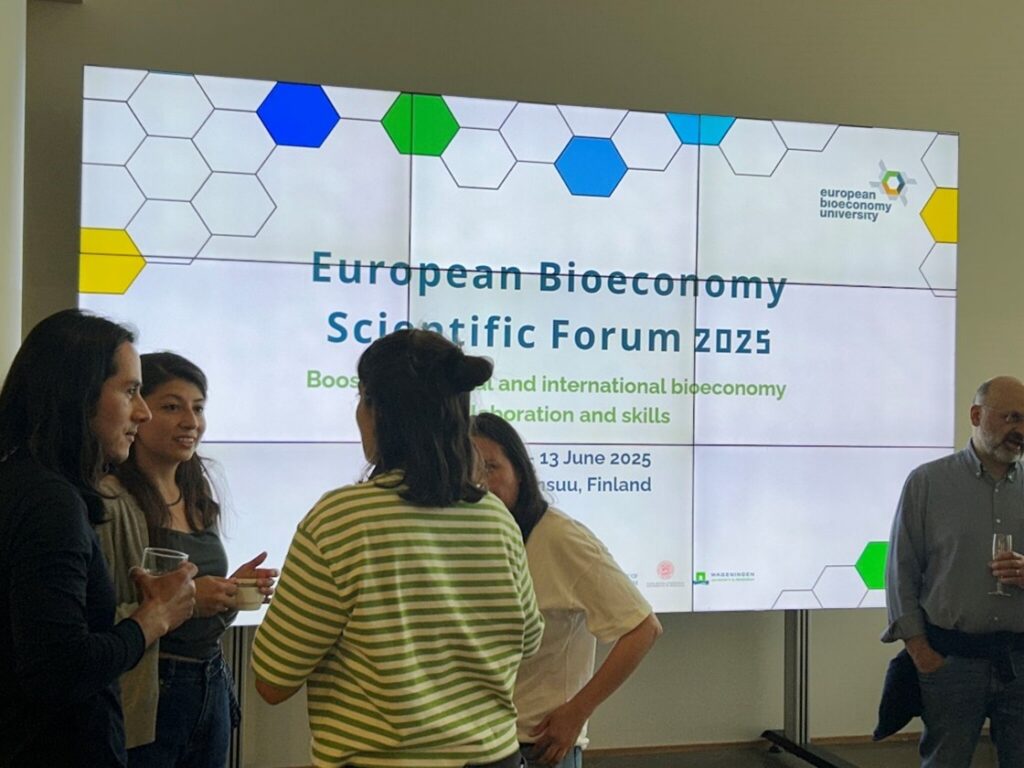
The forum participants
Key Themes: Collaboration, Innovation, and Skills
The Forum’s keynote speakers addressed a range of topics, including the bioeconomy within the new European Commission’s agenda, the current state and outlook of the global bioeconomy, as well as regional and national bioeconomy initiatives and platforms. Several presentations highlighted bioeconomy education and university-led research. During the Young Professionals session, speakers shared their visions for the bioeconomy and recounted their career experiences in entrepreneurship, investment, and sustainability management. Speakers-entrepreneurs shared their professional journeys, startup building, and provided tips and tricks to those considering bioeconomy-related entrepreneurship.
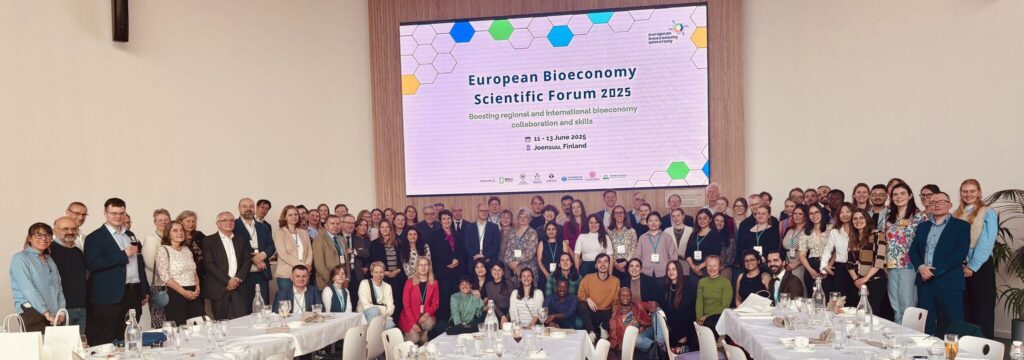
The forum participants
Research and Innovation Through Poster Pitches
Poster pitching sessions were organised to encourage young participants to present their ideas and key findings engagingly and attractively within a limited time, while also helping them develop their public speaking skills. The forum poster pitch sessions motivated young scientists and innovators to present their project results and ideas.
- The session on Biotechnologies and Bio-businesses included topics such as the sustainability of the agri-food supply chain, valorisation of by-products in the agricultural and forestry sectors, biorefining of marine algae, the development of new bio-based materials and products, and waste management.
- The session on Bioresource Management and Governance covered citizen science, digital technologies, and the integration of forest big data and machine learning in planning and managing the use of nature. The session also linked the bioeconomy to sustainable natural resource management, nature conservation, and the resolution of environmental conflicts.
- The session on Bioeconomy Policies and Stakeholders introduced regional and global bioeconomy networks and platforms, connected bioeconomy to social innovation and local stakeholders’ empowerment, and highlighted the role of youth and students in the bioeconomy. It also suggested future-thinking approaches to bioeconomy development.
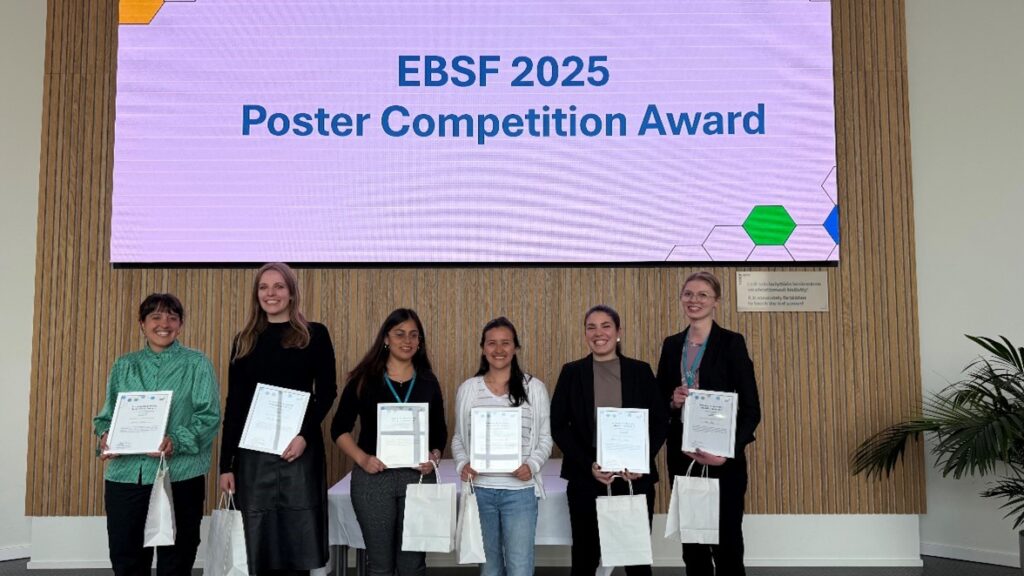
Winners of the poster pitching competition: Lorena Díaz Fernández de Quincoces, Angelina Eßer, Monserrath Ximena Lascano Galarza, Diana Carolina Huertas Bernal, Aitana Zoco de La Fuente, Viivi Berg.
Workshops in Koli: From Ideas to Action
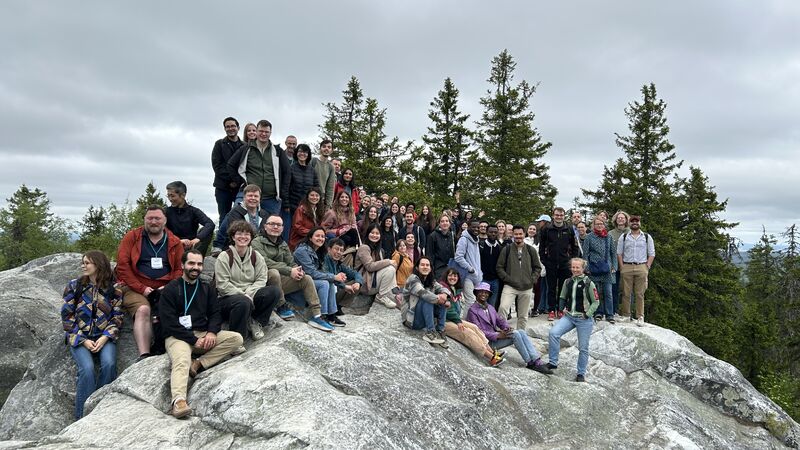
The main forum days were followed by three workshops held in Koli National Park. The workshops focused on Horizon Scanning for Bioeconomy, Empowering Youth in the Bioeconomy, and Universities and Global Collaboration in the Bioeconomy. These engaging workshops, along with a brief walking tour through the forested hills of Koli National Park, provided a great ending to the forum.
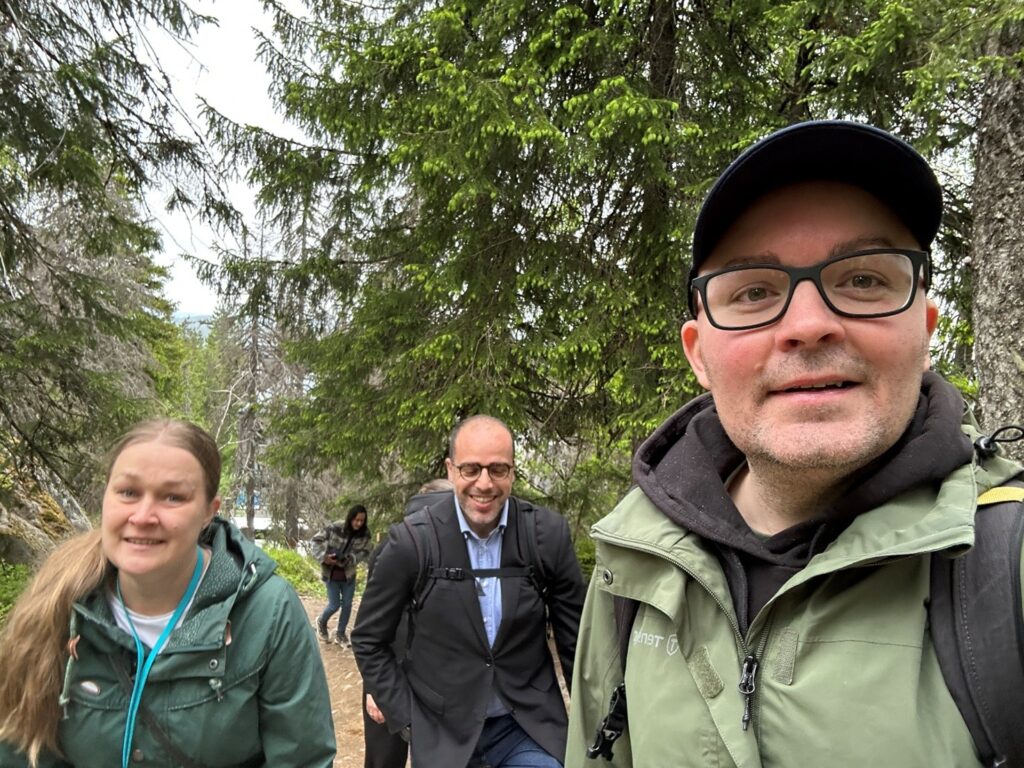
Forum participants at the Koli National Park (from left to right): Anu Laakkonen (University of Eastern Finland), Giuseppe Pellegrino (The Directorate-General for Research and Innovation), Denis Dobrynin (University of Eastern Finland)
Towards the next EBSF
As the forum came to an end, a clear message remained: the development of the bioeconomy depends on collaboration across disciplines and regions. Researchers, students, practitioners, and policy actors all have a role in shaping practical and sustainable solutions. For the School of Forest Sciences, the discussions offered valuable perspectives on skills needs, research directions, and opportunities for cooperation. Our school will continue contributing through its teaching, research, and networks, supporting the development of a responsible and resilient bioeconomy in Finland and beyond. We also look forward to the next European Bioeconomy Scientific Forum, which will be hosted by AgroParisTech in Paris in early autumn 2027.
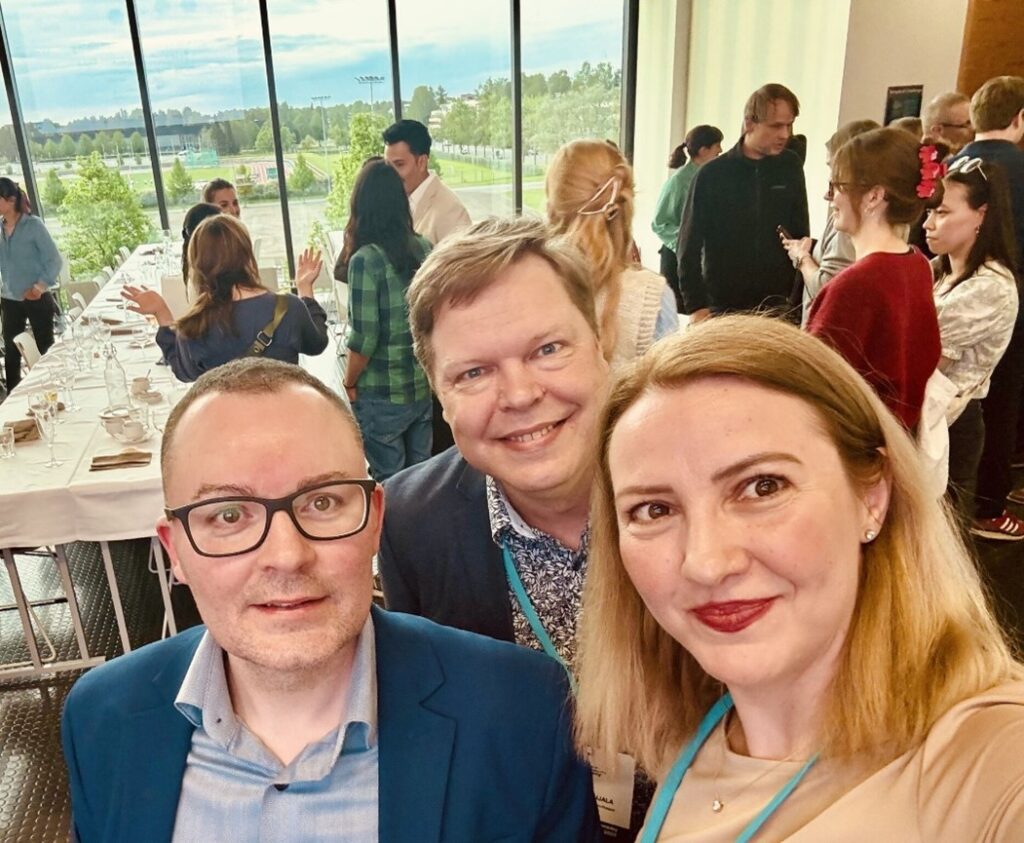
Members of the UEF forum organising team (from left to right): Denis Dobrynin, Teppo Hujala, and Natasa Lovric.
The European Bioeconomy Scientific Forum is the official biennial event of the European Bioeconomy University Alliance (EBU). The EBU consists of eight European universities and aims to contribute to the establishment of Europe’s leading intellectual institution for education, research, and innovation in the bioeconomy.
This alliance strengthens the connection between academia, policy, and practice to enhance a sustainable and competitive European bioeconomy while collaborating with European and global networks and partners. University of Eastern Finland holds the EBU’s Presidency 2025-2026, and Rector Tapio Määttä serves as the current Chair of the Presidency. Next EBSF will be hosted by AgroParisTech in Paris in early autumn 2027.
