
“Teach the teachers” Multiplier Event at UEF
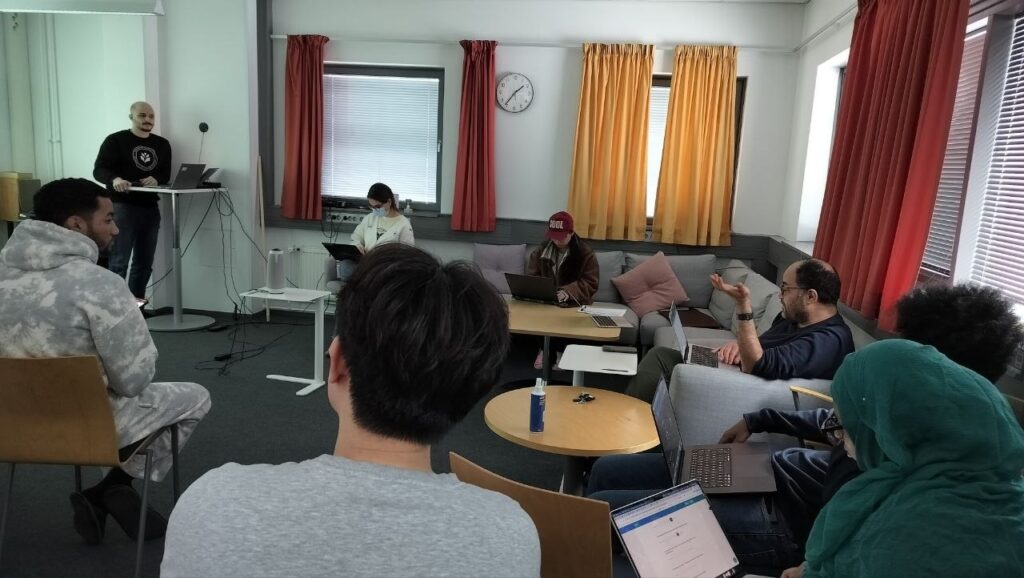
The “Teach the Teachers” multiplier event, held on 5 March 2026 at the University of Eastern Finland, was designed as a hands-on workshop aimed at supporting educators in applying learning analytics within their own teaching practice. The session focused on how multimodal data can be used to monitor student progress and inform timely interventions. Here are the key takeaways that stood out.
1. Learning Analytics Is About Action, Not Just Data
One of the clearest messages from the workshop was that learning analytics is not simply about collecting data: it’s about using it to make better teaching decisions.
Participants were introduced to learning analytics as a process: collecting, analysing, and interpreting data to support learning. But the emphasis quickly shifted to application. Data only becomes meaningful when it informs action—whether that means reaching out to a struggling student or redesigning part of a course.
2. Multimodal Data Expands the Bigger Picture
A major theme was the value of multimodal data: data that goes beyond traditional learning management systems.
Educators reflected on the variety of data they already use, from surveys to external tools and communication platforms. This sparked an important realization: many teaching insights already exist, but they are often scattered and underused.
Bringing these sources together allows educators to build a more complete picture of student engagement and learning behavior.
3. From Raw Data to Meaningful Indicators
The workshop highlighted the full journey from raw data to actionable insights.
Using tools developed within the ISILA project, participants saw how data can be:
- collected in systems like a Learning Record Store (LRS),
- structured and transformed,
- and finally visualised in dashboards.
Metrics such as time spent or number of interactions are not the end goal—they are proxies. Their value lies in how they help infer meaningful concepts like engagement or participation.
4. Dashboards Only Work If They Support Decisions
Dashboards were a central practical component of the session. But the takeaway wasn’t about building more dashboards—it was about building better ones.
Participants explored how data visualisation should simplify complexity, highlight what matters, and guide decision-making.
A well-designed dashboard doesn’t just display data: it tells a story that helps educators decide what to do next.
5. Interventions Need to Be Intentional
Another key insight was that learning analytics is incomplete without intervention.
Participants worked through scenarios to design their own interventions, focusing on:
- defining clear objectives,
- selecting relevant data,
- aligning actions with pedagogical goals.
interventions ranged from simple (sending targeted feedback) to more structural (adjusting course design). The exercise reinforced that even small, timely actions can have a significant impact.
6. Ethics Must Be Built In, Not Added On
The workshop closed with a strong focus on ethical considerations—and this wasn’t treated as an afterthought.
Discussions highlighted the importance of transparency with students, informed consent, responsible data use, and ensuring no learner is disadvantaged.
A key takeaway was that trust is foundational. Without it, even the most sophisticated analytics systems lose their value.