
Namibian learning from Tanzania: A FUTE Staff mobility Exchange Experience May 2026
by Ms. L. Amakali and Ms. K. Hambabi
In May 2026, we had the privilege of participating in a staff mobility visit to Tanzania as part of the FUTE project. We are teacher educators from Namibia, and our visit formed a key activity within the FUTE project’s broader mission: equipping teacher educators to embed sustainability into their practice and, through them, to shape the next generation of teachers.
Our time at the Dar es Salaam University College of Education (DUCE) and various partner institutions offered an immeasurable opportunity to exchange knowledge, observe innovative pedagogical approaches, and deepen our understanding of how Tanzanian education system in schools and higher education institutions specifically are integrating sustainability principles and skills-based learning into teacher education and classroom practice.
On the first day, the visiting group was struck by the high population density and constant movement of people from place to place. Coming from a country with a comparatively smaller population, this level of crowding was notable and required immediate adjustment. In situations where accidental physical contact occurred, the visitors instinctively paused to offer an apology; however, residents generally continued without interruption, suggesting that such encounters are considered normal in a busy urban environment. This initial exposure provided valuable contextual understanding and served as an important starting point for engagement with the DUCE. To support the visit, the FUTE team assigned a postgraduate student teacher who assisted the delegation in navigating the various activities and logistical processes throughout the Tanzanian visit.
Engagement with Demonstration Schools
The DUCE campus integrates its demonstration schools within the college environment, spanning early childhood education through to secondary level. DUCE owns and operates three demonstration schools Changombe Demonstration Pre-primary School, Changombe Demonstration Primary School, and Changombe Demonstration Secondary School which function both as model schools and as key sites for teacher education.
During the visit, we had the opportunity to engage directly with the pre-primary and primary phases. It was further established that these demonstration schools have been under DUCE supervision since 2005. A meeting with the Head(s) of School facilitated a focused and productive discussion on the schools’ educational philosophy and implementation strategies, with specific attention given to experiential learning and context-based learning approaches. The visit provided valuable insights into the enactment of competence-based education in Tanzanian primary schooling. Notably, there were visible efforts to promote practical and hands-on learning activities, even within conditions of resource limitation. Overall, the demonstration schools were presented as serving three interrelated functions: providing a practical training environment for student teachers through learning-by-doing, modelling quality education and strong performance, and offering schooling that serves both the surrounding community and the DUCE community.
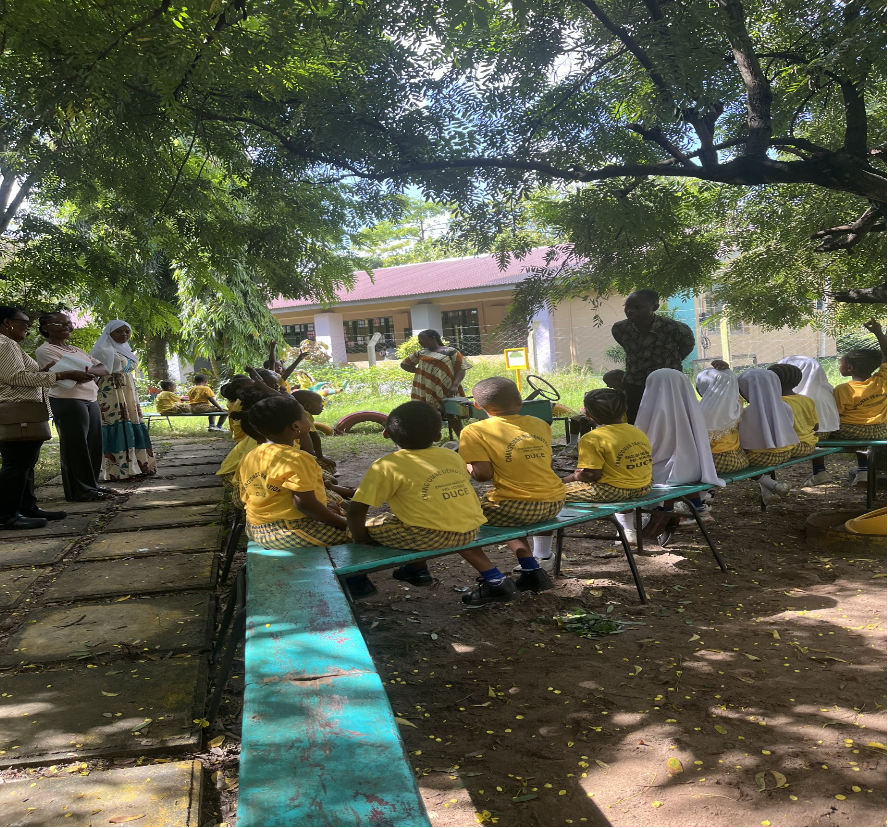
The visit to Changombe Demonstration Primary School for a lesson demonstration on play-based learning, theme-based environmental studies, and concept development was particularly illuminating. The pedagogical approaches observed were consistent with the FUTE project’s emphasis on sustainable, skills-oriented, and learner-centred education. Classroom observation highlighted a collaborative instructional model in which two teachers and two student teachers co-facilitated learning activities. In one lesson, learners were supported to develop understanding of subtraction through the use of stones as concrete learning aids. Learners first engaged with mathematical ideas through tangible, hands-on manipulation of materials before transitioning to formal symbol recognition and consolidation of key concepts. This progression from concrete experience to abstract representation reflects widely recognised principles of effective mathematics instruction and aligns with learner-centred pedagogical practices documented in other educational contexts, including Finland.
Engagement with DUCE teacher education
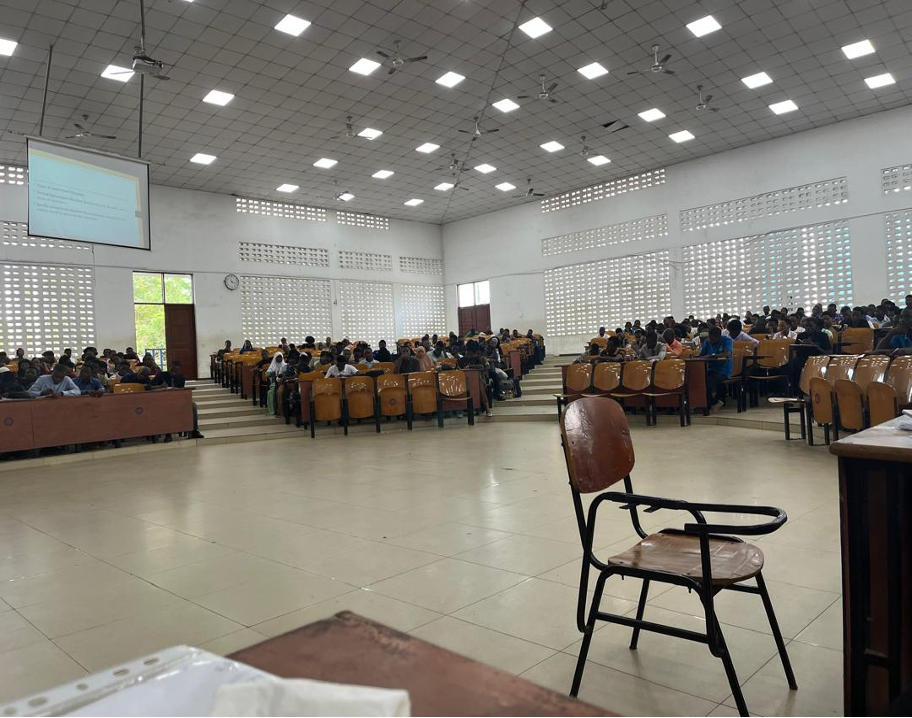
Attendance at a curriculum studies lecture with more than 200 students illustrated the scale and depth of teacher education at DUCE. The session underscored the central role of curriculum design in shaping pedagogical practice and guiding effective teaching and learning. Despite the large class size, the integration of technology-supported instruction enabled meaningful participation and supported learners’ engagement with the content. Digital tools and structured facilitation strategies appeared to strengthen interaction, enhance comprehension, and promote sustained attention. Overall, the experience provided a useful point of comparison with familiar teaching contexts and offered practical insights into approaches for managing and teaching effectively in large enrollment settings.
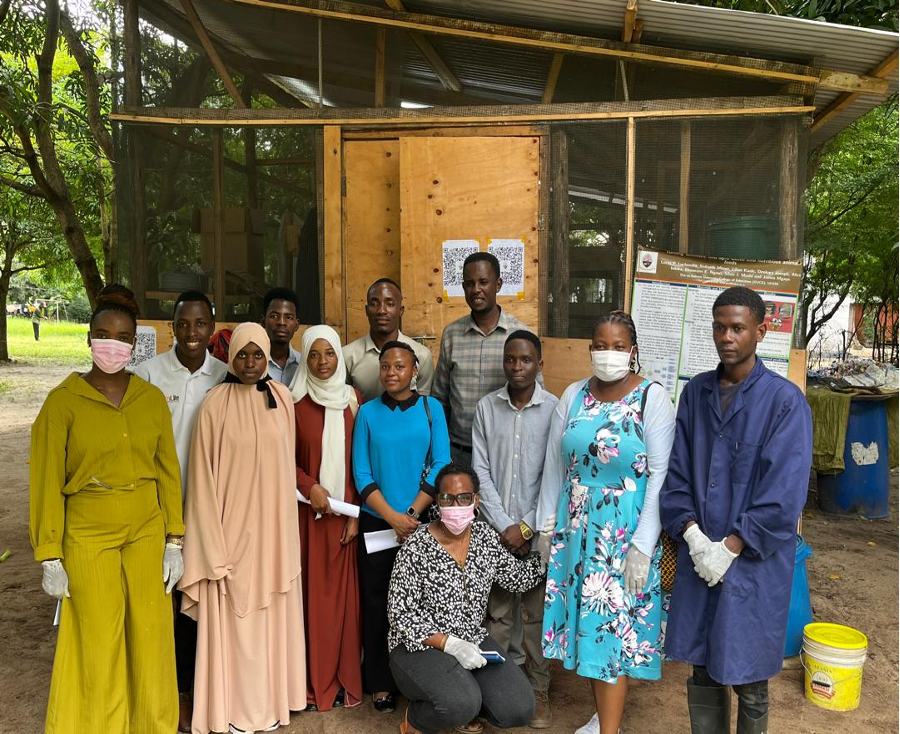
The visit also included an innovative demonstration of the Black Soldier Fly (BSF) initiative, which illustrated how sustainability principles can be embedded in practical, skills-based learning. The project converts organic waste into protein for animal feed, providing a concrete example of sustainable development in practice. Initiatives of this nature offer a valuable model for strengthening the integration of environmental sustainability within vocational and skills-oriented education.
In addition, an educational visit to the University of Dar es Salaam (UDSM) main campus at Mlimani provided broader insights into Tanzania’s higher education landscape. The campus, located on elevated terrain, comprises numerous faculties and a wide range of academic disciplines. Its scale reflects the significant scope of higher education provision in Tanzania and highlights the magnitude of teacher education within a diverse and expansive national education system.
Excursion to Zanzibar and Kariakoo Market
During the mobility period, an educational excursion to Zanzibar further enriched cultural and educational understanding. The journey involved use of public transport and ferry travel across the Indian Ocean. In Zanzibar, a visit to Stone Town enabled engagement with historical and architectural heritage as well as interaction with local communities. A spice farm tour provided insights into agricultural practices, traditional medicinal knowledge, and sustainable resource use. Observations of spice cultivation, processing, and value addition demonstrated how vocational skills can be linked with environmental sustainability principles that align closely with competence-based education reforms.
Finally, Dar es Salaam’s major commercial hub, Kariakoo Market, was identified as a significant regional marketplace serving both surrounding areas and neighboring countries. In examining the market from a sustainability perspective, analysis can be framed through environmental, social, and economic dimensions, alongside consideration of the market’s-built design and infrastructure features.
Environmental sustainability (waste, water, flooding, hygiene)
Solid waste management constitutes a major sustainability concern in Kariakoo Market, given the large volumes of mixed waste generated daily particularly organic waste associated with extensive food trading. Evidence from earlier research on Kariakoo’s waste system indicates persistent challenges related to inadequate storage, weak collection systems, and design constraints that limit effective waste handling. The sustainability implications are significant: inefficient waste management increases risks to public health, contributes to pest infestations, obstructs drainage infrastructure, and intensifies localised pollution.
Closely linked to waste challenges is the issue of drainage, wastewater management, and flooding risk in Dar es Salaam, including the Kariakoo area. Sanitation and drainage limitations have been widely associated with flooding events that create unsafe conditions for the handling of food and water, particularly during periods of heavy rainfall. Weak drainage and sanitation systems reduce both environmental health and the resilience of market operations. During rainfall episodes observed in May 2026, inadequate drainage capacity was observed associated with temporary interruptions of business activities, as floodwater could inundate trading areas and submerge goods, thereby disrupting livelihoods and market functionality.
In response to these challenges, the relevance of “zero waste” and recycling-oriented initiatives implemented in Dar es Salaam becomes apparent. Waste programmes that promote separation at source, reuse, recycling, and organic waste management offer practical pathways for improving sustainability in high-waste environments such as markets. For Kariakoo, the potential sustainability benefits of such approaches include enhanced waste diversion through segregation of organic waste and plastics, improved opportunities for composting, and stronger linkages to material recovery systems, which together could reduce environmental burdens while improving sanitation outcomes.
Beyond operational management, sustainability considerations at Kariakoo also extend to the built environment. Some architectural descriptions characterise the market’s design as incorporating climate- and water-sensitive features, including a structure resembling “trees” that provide shade and roof elements shaped as funnels that collect rainwater into underground tanks. From a sustainability perspective, these features suggest potential benefits such as reduced heat exposure through passive cooling and improved water conservation through rainwater harvesting, provided that such systems are adequately maintained and managed to ensure safety and functionality.
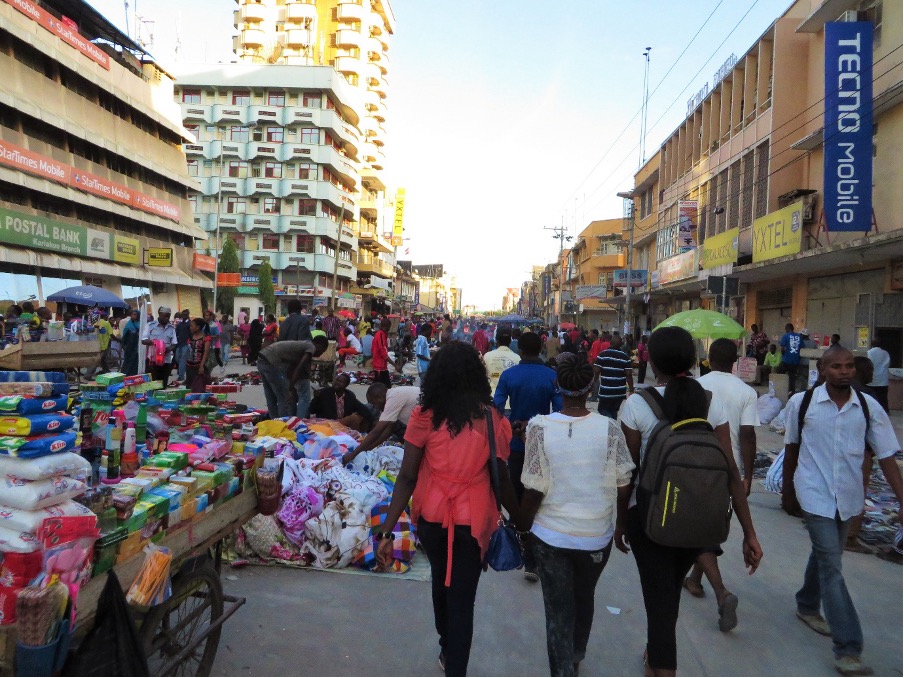
Public health and food safety in Kariakoo Market are closely shaped by prevailing sanitation conditions and periodic flooding, both of which can compromise safe food handling practices, including the washing of produce and the maintenance of cleanliness around stalls. Strengthening access to clean wash-water, improving drainage, increasing the availability of toilets, and promoting consistent hygiene practices are therefore essential measures for protecting the health of both traders and consumers.
Market sustainability is also influenced by issues of safety and resilience, particularly in relation to fire risk. Observations of stall arrangements indicated limited spacing between trading units and an apparent absence of readily accessible fire extinguishers in some areas. Within broader discussions on market modernisation and infrastructure upgrades, the need for fire safety preparedness—such as clearly marked emergency exits, fire extinguishing points, and coordinated emergency response systems—has been emphasised as a priority. From a sustainability perspective, effective safety systems reduce disaster vulnerability, safeguard livelihoods, and enhance the market’s capacity to recover from shocks.
In economic terms, Kariakoo is widely recognized as a central hub for trade and food distribution in Dar es Salaam and beyond. The market supports diverse livelihood strategies, including intermediary services in which individuals procure goods on behalf of customers through an “order-with-me” arrangement, facilitate payment, and organise delivery through courier mechanisms. Kariakoo also sustains a wide network of small and medium enterprises (SMEs), as many traders from within Dar es Salaam, other regions of Tanzania, and neighboring countries source stock from the market to supply their own businesses. The long-term economic sustainability of these market-linked enterprises is strengthened when supportive conditions are in place, including stable infrastructure, fair and effective market governance, reliable safety provisions, and improved sanitation—factors that collectively enable businesses to remain competitive, attract customers, and reduce daily operational losses.
Final Reflections
What the Tanzania mobility experience demonstrated, above all, was the value of exchange and mutual learning in strengthening ESD within teacher education. The FUTE project creates collaborative spaces in which educators from different contexts can share knowledge, observe innovative practices, and deepen understanding of how ESD principles can be intentionally woven into teacher preparation and professional practice.
Although Namibia, Tanzania, and Finland differ significantly in context, the underlying challenges remain comparable: how teachers can be prepared as creative and reflective practitioners, how learning can be made meaningful and relevant to learners’ lives, and how ESD across the curriculum can be achieved without treating sustainability as an “add-on.” The mobility experience illustrated that effective ESD requires more than policy statements; it requires alignment between curriculum intentions, pedagogy, learning environments, and teacher professional development.
Visits to Chang’ombe and other primary school contexts highlighted how Tanzanian educators innovate within real constraints by applying learner-centred approaches that support ESD competencies such as problem-solving, collaboration, and contextual reasoning. The use of stones to support subtraction, the implementation of play-based learning, and the creation of inclusive classroom practices demonstrated how teaching can remain practical and participatory even where resources are limited. These approaches align with ESD’s emphasis on active learning and developing competencies that enable learners to respond to real-life challenges.
Similarly, the Black Soldier Fly demonstration on campus provided a strong example of ESD in practice, showing how sustainability can be integrated into vocational and skills training through locally relevant innovation. By transforming organic waste into protein for animal feed, the project modelled sustainability thinking, circular practices, and applied problem-solving—key elements of ESD and competence-based learning.
The strength of the FUTE project lies in this kind of cross-cultural learning. Across Namibia, Tanzania, and Finland, a shared commitment is evident: strengthening teacher education so that educators are able to embed ESD values and competencies into everyday teaching, and thereby influence how future teachers shape learning in schools. The exchange reinforced the view that teacher educators themselves must be equipped to model ESD-oriented pedagogy, including learner-centred methods, practical engagement, and reflective professional practice.
These lessons are particularly timely for Namibia and for broader African contexts, as education systems advance competence-based reforms and place increasing emphasis on vocational and skills development. The Tanzanian experience points to the importance of coherence: ensuring that curriculum intentions are reflected in teacher professional development, that learning environments support hands-on and inquiry-based practice, and that teachers are positioned as active agents of change rather than passive deliverers of prescribed content. Moving beyond theory towards problem-solving, creativity, and real-world application is not simply a pedagogical preference; it represents a systemic commitment to quality education and to ESD implementation in practice.
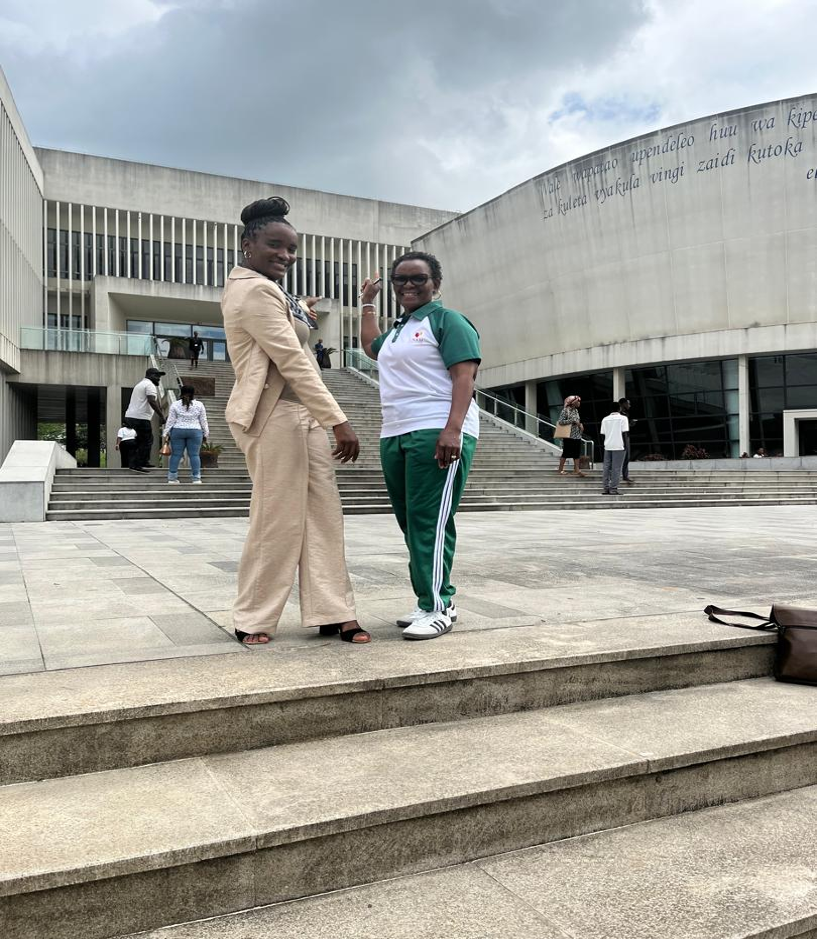
This blog post reflects the experiences of visiting educators during the FUTE staff mobility to DUCE, Tanzania, in May 2026. The FUTE project’s shared commitment to strengthening Education for Sustainable Development (ESD) within teacher education created meaningful opportunities for cross-cultural learning and professional growth. Appreciation is extended to the DUCE team—particularly the postgraduate student teacher Roida—and to Janeth, Katherine, Joseph, Sagamiko, Rehema, Mary, Innocent, Lukas, and all others who contributed to the success of the exchange through guidance and hospitality throughout the visit. Karibu sana. Nakupenda sana.