
CUDIS project ends in December 2025 – Results and activities
Cultural Knowledge and Digital Skills in Globalising Working Life – CUDIS Project’s (1 Jul 2023 – 31 Dec 2025) goals were to develop future working life skills and to promote the formation of working life networks in North Karelia. The target groups were companies and students and graduates of humanities and computing from both international and Finnish degree programmes. The project activities focused on international and digital competence, skills anticipation, forecasting in working life, and self-employment skills.
The project was carried out by interdisciplinary co-operation of the School of Humanities and School of Computing at the University of Eastern Finland. The project was co-funded by the European Social Fund Plus (ESF+) as a part of the Innovation and Skills in Finland 2021–2027 programme.
The project’s closing event was held on 13 November 2025 – read more about the event (in Finnish).
New competence and connections to working life
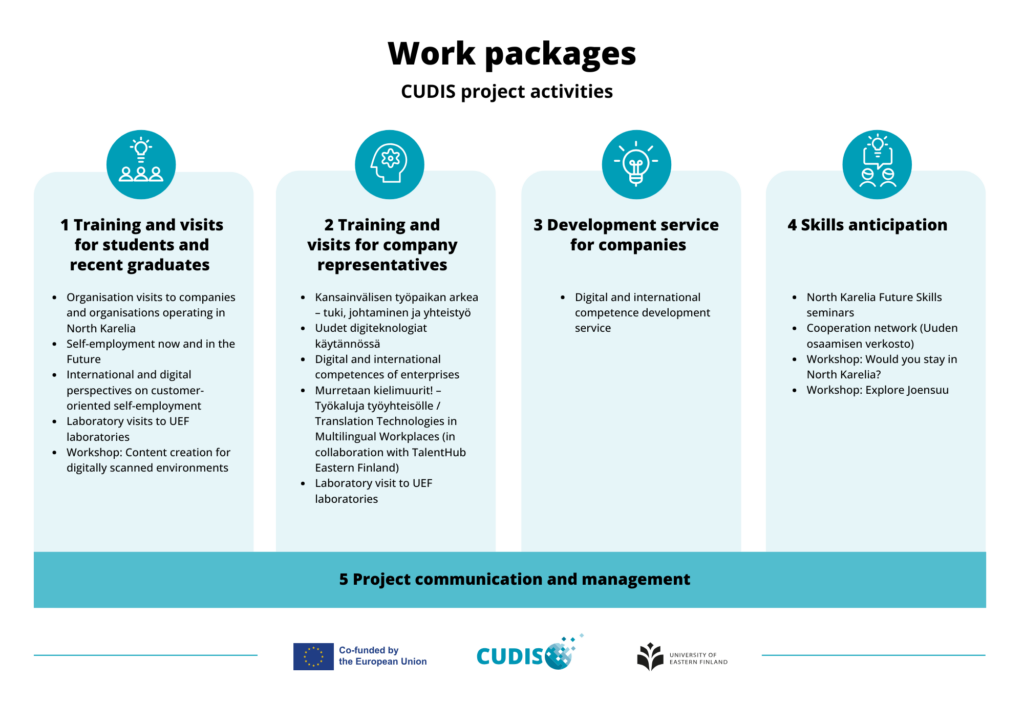
CUDIS organised various events focusing digital and international skills, including training, a development service for companies, workshops, company and laboratory visits, and seminars. The figure below provides a summary of the project’s activities by work package.
CUDIS organised training for company and organisation representatives regarding international skills and new technologies in working life, such as plain Finnish at work and VR communication tools.
Training meetings focusing on self-employment enhanced students’ understanding of different types of self-employment, funding, entrepreneurship studies, and Finnish business culture.
In the development service student teams assessed the level of digital and international competence in North Karelian companies through interviews and created tailored development plans for them. The companies were able to use the plans, for instance, their strategic work. During the service, companies and students built strong networks creating a great foundation for future cooperation.
The project organised CUDIS on the Road organisation visits bringing together North Karelian companies and Finnish and international students from humanities and computing. The visits enhanced students’ knowledge of North Karelian business life, open positions, and cooperation opportunities during studies.
CUDIS also organised UEF laboratory visits for students and organisation representatives. The goal was to raise awareness about the laboratories, the equipment, and cooperation opportunities in student projects, research, and company operations. For example, in SenseLab customer experience and consumer behavior can be studied using scents, lights, and XR technologies.
The project wanted to provide more hands-on training due to requests from students. In the Content creation for digitally scanned environments workshop students gained experience in digital scanning, digital twins and creating virtual tours.
North Karelia Future Skills Forum events focused on identifying change in working: skills anticipation, trends, and weak signals. The events were open to companies, trailblazers, experts, and others interested in developing working life in North Karelia. The forum offered expert insights, discussion and networking opportunities.
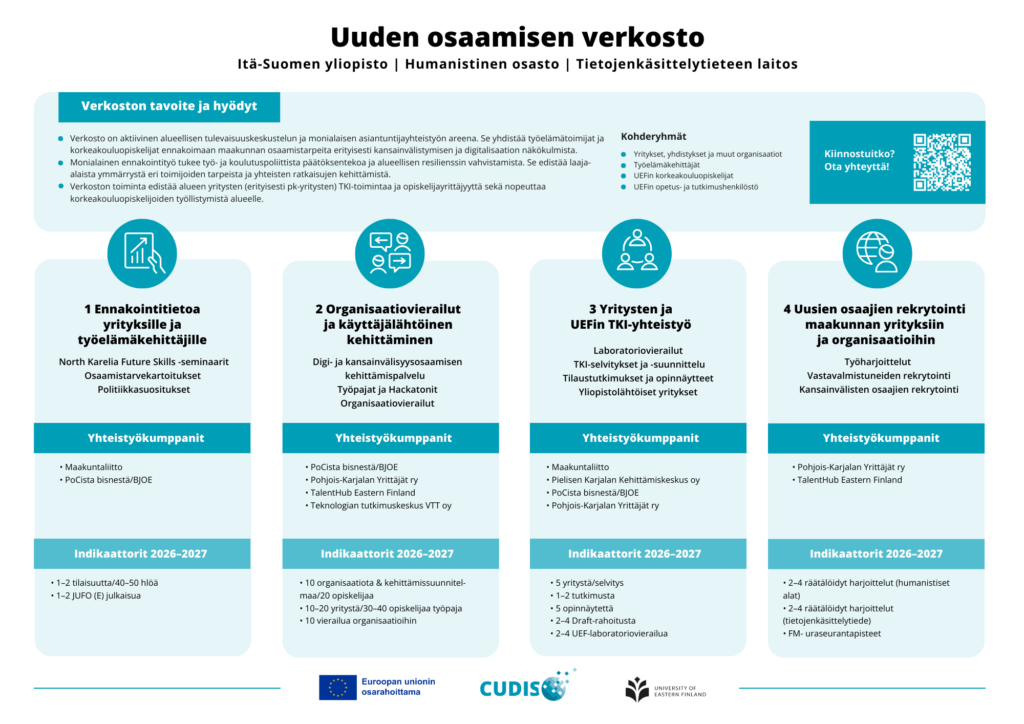
To continue the important discussion around internationalisation and digitalisation in North Karelia, CUDIS has created a network (Uuden osaamisen verkosto) that promotes regional future-oriented discussions and multidisciplinary expert cooperation. See more information below (in Finnish). The figure will be updated into English in the future.
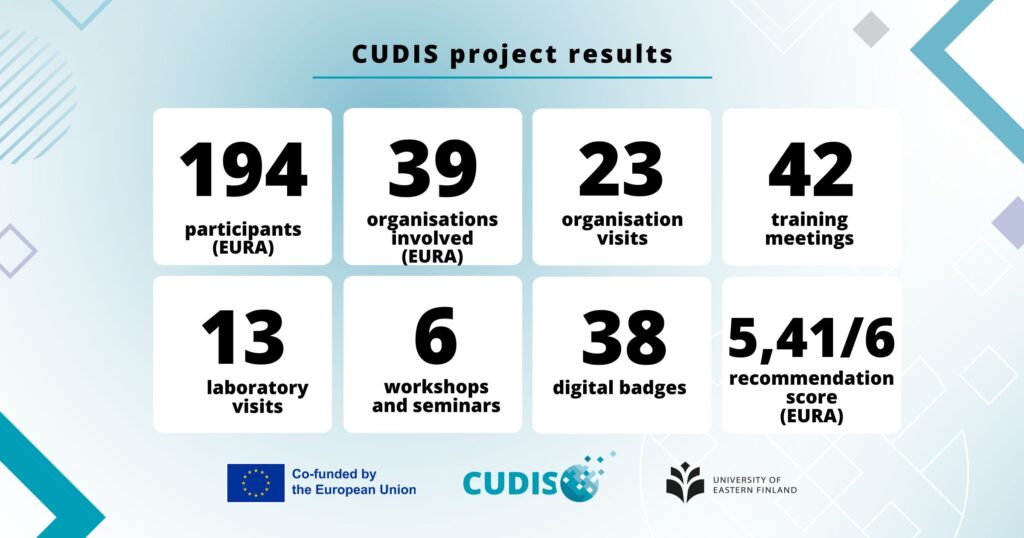
CUDIS results
The training, development service and other events supported and enhanced the competence of North Karelian companies and their employees. Companies gained up-to-date expert knowledge and new methods for developing services, products, and, in particular, internal operating environments. The project also strengthened the working life skills and networks of students and recent graduates in the humanities and information technology, with a view to facilitating their employment.
Text: Project secretary Oona Järvinen