
With a big heart and lots of love – being grandparents to triplets in Finland and New Zealand
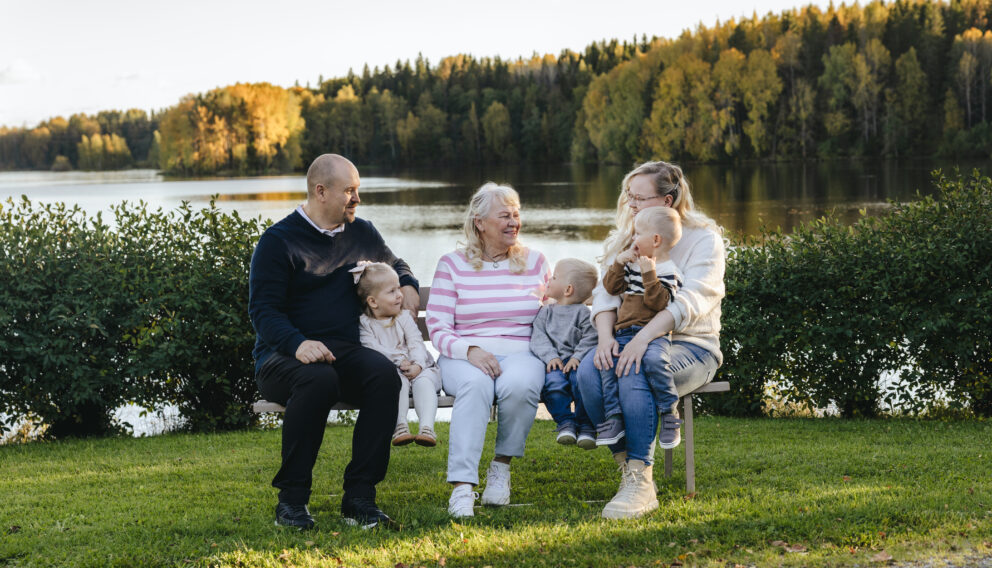
(Picture: Eveliina Tammi / TammiKuvaus)
Multiple Birth Awareness Week will be held from 2 to 8 November 2026. The theme will be explored through various communication channels worldwide, focusing on issues relating to the care, culture and equality of multiple-birth families. The week will highlight multiple-birth families and the multidisciplinary staff of the various organisations working with them, such as health and social care professionals. Two grandmothers, Marke from Finland and Heather from New Zealand, volunteered to share their experiences of being grandparents to triplets.
The news that she was to become a grandmother to triplets didn’t worry Marke; rather, the fact that the pregnancy was progressing well filled her with joy and positive thoughts. “Three children at the same time is a lot, though, and having triplets was something new that filled me with wonder. Perhaps it was better not to know all the risks, so I didn’t panic. I had a strong sense of trust in the healthcare system and in the fact that everything would go well,” said Marke.
Heather, for her part, reflected on how the awareness of a high-risk pregnancy was an ever-present reality, bringing with it both concern and the hope that everything would turn out for the best. Further thoughts were prompted by “looking after three children of the same age and the major life change the family was about to face. Triplets weren’t entirely new to the family, as there have been triplets in the family before, but it was still a huge surprise.”
Marke explained how “a family with multiples hoped for peace and quiet at home after the children were born, and the parents looked after the children together, as in Finland the father is able to stay at home at the same time as the mother, and the parents can look after their multiples together.” As a grandparent, she therefore didn’t look after the children as much right from the start as she did later on. Marke highlighted how the need for help grew as the triplets became older. “I offer my help and am more than happy to look after my grandchildren, and I live close to them. They mean the world to me and are the most important thing in my life. I’m retired and have time to help, look after them and be there for them in their lives,” says Marke, sharing her experience of being a grandparent. The multiple-birth family was able to receive two hours of help from the local authority’s family support workers about once a week until the children were one year old.
Heather described how “the family was initially provided with support, which gave the parents the opportunity to decide where it was most needed – for example, in looking after the triplets or cleaning the house. Help was available from the Government for 1500 hours over 2 years and the family chose five hours a day, five days a week till the hours were used up. No other separate financial assistance was provided.” However, the parents and grandparents felt it was important to look after the triplets as much as possible themselves. We stayed most weekends and helped the parents even at night so that they could get some sleep.” Close relatives also offered their help to the multiple-birth family. A support network formed around both multiple-birth families, providing help to the parents when needed and looking after the children. This also supported their parenting and helped them maintain their resources.
Both grandparents, Marke and Heather, emphasised how “every child is unique and different, but there were some similarities too. They certainly have their own personalities in any case”. Even as babies, the children slept for different lengths of time and at different times; one of them ate easily and quickly, whilst feeding the other took a long time. Whilst one child might have been quiet, calm or sensitive by nature, another would be lively, spirited and have a strong personality. The group might also include children who looked up to others as role models, whilst others were very independent. The children’s interests ranged from sport to music, reading and cycling.
On the subject of supporting the individuality of triplets, Marke noted that nothing special was required. “Individuality is most evident when a child is alone with a grandparent.” Heather saw “getting to know the children, spending one-to-one time with them, and dressing them in different clothes, which made it possible to tell the children apart even from a distance” as important aspects of fostering individuality.
The grandparents also reflected on a memorable and meaningful moment from among their many experiences. Heather felt that “yes, witnessing the unique relationship between a grandparent and each child, and seeing the child’s development, has been a significant and joyful experience.” Marke, for her part, explained how “being there as a grandparent has been extremely important when a child has been ill. At such times, it has been possible to look after one child at a time, give them our undivided attention and do things together at a leisurely pace.” Both grandparents enjoyed spending time with the triplets as a group, but setting aside personal time for each child individually was also important.
Marke and Heather send their best wishes to the future grandparents of triplets. Marke wants to emphasise that “you’ll get through it all and things can turn out really well. It’s best to take it one day at a time and at your own pace.” Heather reminds us of “the wonderful moments to come with the triplets and watching them grow, which brings immense joy and happiness,” and adds, “as the children grow, new things will emerge and life will get easier.” If being a grandparent to triplets had to be described in three words, Heather thinks they would be “love, tiredness and watching them grow”. Marke, for her part, highlights “happiness, admiration, and uniqueness”. Friends often express admiration when they hear that several grandchildren were born at the same time. As a grandparent, one of the most unique and rewarding experiences is having the opportunity to closely follow the growth and development of three children. “Being a grandparent to triplets is something truly special,” emphasises Marke.
What seemed to unite these grandparents from Finland and New Zealand in particular was their big hearts and the love they felt for their three grandchildren, all of the same age. Being grandparents to triplets is a privilege and a unique part of life in a multiple-birth family. We would like to extend our warmest thanks to Heather and Marke for granting us this interview to enrich the global Multiple Birth Awareness Week.


