
Advancing Sustainability Through Comparative Legal Dialogue: Insights from the 14th Sino-Finnish Bilateral Seminar on Comparative Law
Erika Buri, Teaching and Research Assistant
Mika Nissinen, Associate Professor
Onerva-Aulikki Suhonen, University Teacher
On 19 August 2026, the 14th Sino-Finnish Law Seminar on Comparative Law was held at the University of Eastern Finland’s Joensuu campus. The seminar was jointly organized by the UEF Law School, the Finnish China Law Center, and the Chinese Academy of Social Sciences, Institute of Law (CASS Law). The 14th Sino-Finnish Bilateral Seminar brought together scholars from China, Finland, Mexico, and Italy. The programme examined topical themes, especially from the perspective of sustainability, environmental law, criminal law, tax law and corporate responsibility. Scholars across various fields of law held presentations and engaged in discussions about how sustainability, environmental issues, innovation and climate change are addressed within different legal frameworks.
The seminar day was divided into four sessions, each including three to four presentations. Each presentation was followed with a discussion that was moderated by two representatives. The first session included themes of sustainability in company law, the European response to the need for innovative and sustainable companies, the role of patent pools and small and medium-sized enterprises in encouraging innovation, and copyright liability as a governance mechanism for responsible AI innovation. Cross-cutting themes in the presentations were innovation and sustainability. Discussions, for instance, addressed the lagging productivity growth in Europe compared to China and the US and what issues this poses for green and digital transitions. Other discussions considered questions about sustainability’s role in company law and to what companies should apply sustainability-orientation to? In addition to questions that considered intellectual property rights in relation to innovation that is responsible and addresses global challenges. The discussions provided insights into how these matters were handled in different countries and what can be learned from these legal frameworks.
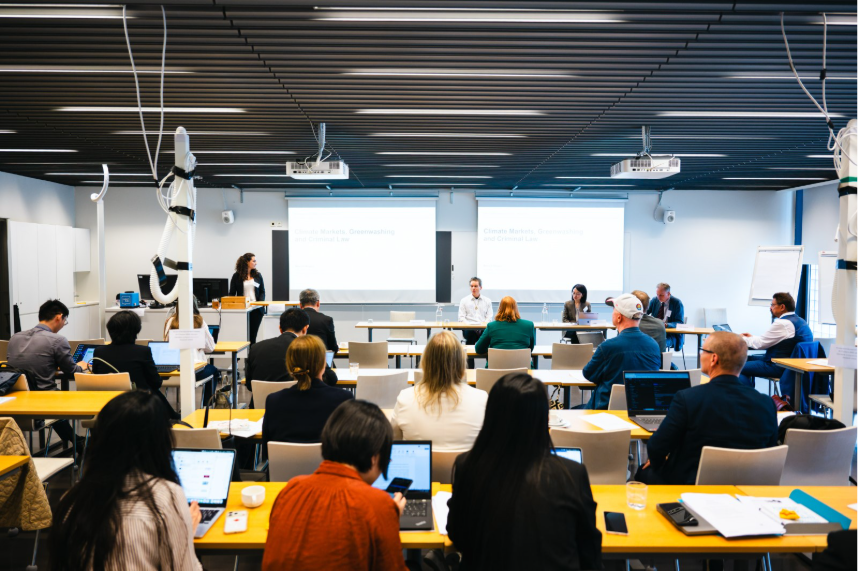
The second session of the seminar day focused on environmental criminal law and how we can use criminal law as a tool to fight environmental issues. Questions that came up during the second session were, for instance, what is or could be the role of criminal law in the sustainability transition? What kind of offence should greenwashing fall under? The session also considered sustainable criminal justice and how education about human rights can contribute to it.
Topics of the third session focused on China’s Ecological and Environmental Code and defining sustainability as a principle in EU energy law. In the third session the conversations between speakers, moderators and audience were centred around the history and implementation of China Ecological Environment Code. Highlighting what was learned from the process of drafting up to the implementation and comparing it to the Finnish legal framework.

The fourth and last session of the seminar consisted of three presentations about public interest litigation under the concept of sustainable development, compliance evidence as an infrastructure for public interest accountability, and sustainability through environmental taxation. Discussions were centred around questions about public interest litigation: how judges are trained to assess and consider the requirements of the sustainable development concept in environmental litigation in China, and what kind of evidence should be presented in environmental litigation so that it corresponds to the right questions? The discussion about environmental taxation highlighted the importance of taxation as a tool in supporting the environment and encouraging sustainability by making pollution more expensive while making sustainability more attractive and financing the environmental transition. During the session it was emphasized how sustainability should be a cross-cutting objective that shapes the entire tax system.
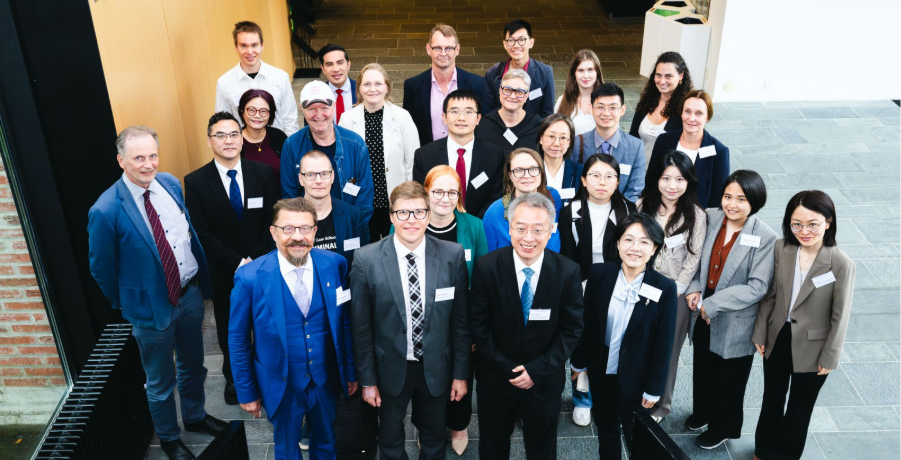
The Sino-Finnish Bilateral Seminar is a platform for researchers to meet, exchange views, and deepen cooperation. Alongside the Sino-Finnish dialogue, the seminar also creates an important opportunity for dialogue between senior researchers and the younger generation of researchers. Overall, the seminar was full of fruitful discussions, and scholars across different fields shared their ideas on sustainability and the environment. Environmental problems are escalating year by year into a severe global crisis that threatens human health, food security, and economies globally. Research into sustainability and its incorporation into different areas of law is vital in order to prevent this. The seminar considered these topical themes and allowed ideas for improvements to be shared and awareness about the problem areas to be highlighted and considered. To conclude the seminar and its considerations, we have a lot to learn from other legal systems, and it is invaluable for researchers to share their research not only nationally but in international forums.