
A Journey from the Andes to the Finnish lakeland
By Professor Roberto Ariel Abeldaño Zuñiga
When I arrived in Finland in 2023, I never imagined that a few years later I would be writing this as a professor in the Department of Nursing Science at the University of Eastern Finland. The journey here, from the foothills of the Andes in Argentina, through the vibrant academic landscape of Mexico, to the serene shores of Lake Kallavesi, has been anything but conventional.

Why Kuopio, and why now?
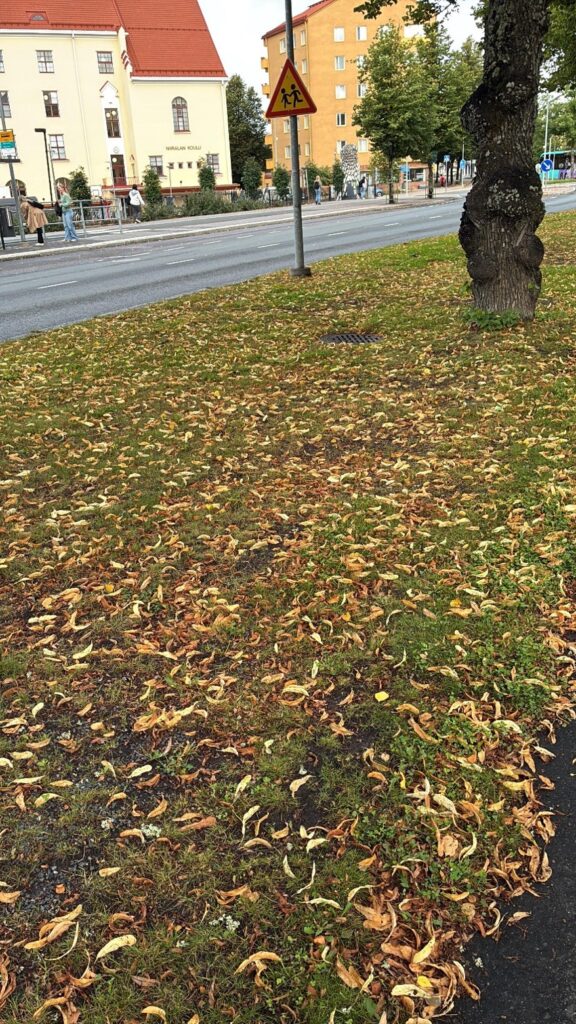
There is something magical about Kuopio in autumn. The birch trees turn golden, and the air carries that crisp promise of winter in August. But beyond the picture-postcard beauty, I found something even more unique: a research community genuinely committed to understanding the complex interrelationships between health, the environment, and human well-being.
The Department of Nursing Science at the University of Eastern Finland has long been a pioneer in research in this field. What attracted me here was the opportunity to combine my training with a department that understands that the science of nursing is not limited to direct patient care, but encompasses understanding the social, environmental, and ecological determinants that influence population health outcomes.
From earthquakes to epidemics: A career path in understanding vulnerability
My journey began not with climate data, but with communities. As a nurse in Argentina, I witnessed firsthand how disasters generate cascading health crises that linger beyond any immediate emergency. That experience led me to Mexico, where I studied the psychosocial impacts of the 2017 earthquakes on Indigenous communities in Oaxaca.
But my research has always had a global perspective. Through collaborations with the Global Burden of Disease study, I have contributed to the understanding of population health in dozens of countries. I have collaborated with the World Bank, UNAIDS, and the International Organization for Migration. I have published over 130 research papers, including articles in The Lancet and Nature Medicine. What unites all this work is a simple question: How do environmental changes affect the most vulnerable populations?
In one our most recent study, currently under review, we investigated a question that twenty years ago would have seemed like science fiction: Does climate change influence the spread of Ebola? The short answer is yes, but not in the way you might expect.
We found that habitat suitability for fruit bats in Africa depends primarily on relative humidity, temperature, and rainfall. These warm, humid tropical environments are precisely where fruit bats thrive. But here’s the interesting part: the incidence of Ebola was not higher in areas with larger bat populations. Instead, the peak occurred where human populations overlap with bat habitats at degraded ecological boundaries.
In other words, as climate change alters precipitation patterns and pushes communities toward forest edges in search of resources, the distance between humans and bat roosts shrinks. When fruit bats experience nutritional stress due to changes in food availability, they may shed more viruses. And when humans rely on bushmeat or share water sources with bats, transmission events become more likely.
We are currently testing predictive models that could help identify high-risk areas for the emergence of zoonotic diseases based on climate projections. This isn’t just academic curiosity; it’s the kind of research that could help health systems prepare before outbreaks occur.
What does bat ecology have to do with nursing practice?
Actually, everything.
Nurses are often the first point of contact in communities facing emerging infectious diseases. Understanding the environmental factors that drive outbreaks helps us prepare health systems, training frontline staff, and develop culturally appropriate health communication strategies. When we know that climate-driven changes in vectors and reservoirs behavior could precede outbreaks, we can strengthen surveillance systems and community education in vulnerable regions before cases appear.
At UEF, I am excited to incorporate this interdisciplinary perspective into our postgraduate programs, training the next generation of nurses to think beyond the clinical setting and considering the ecological and social determinants of health in a broader sense.
My new life in Finland
Finland has welcomed me with open arms! The Finnish commitment to sisu resonates with my own experience. Adapting to winters that would have seemed impossible in subtropical Argentina, or learning to appreciate the serene beauty of Finnish nature, brings something new every day.
To my new colleagues and students: thank you for the warm welcome! I look forward to the conversations, collaborations, and discoveries that await us. And to anyone considering a similar journey, from one corner of the world to another, remember that the most meaningful research often emerges at the intersection of disciplines, cultures, and perspectives.