
Passion, Patience and Practice: Small-Scale Forestry Research in Kenya
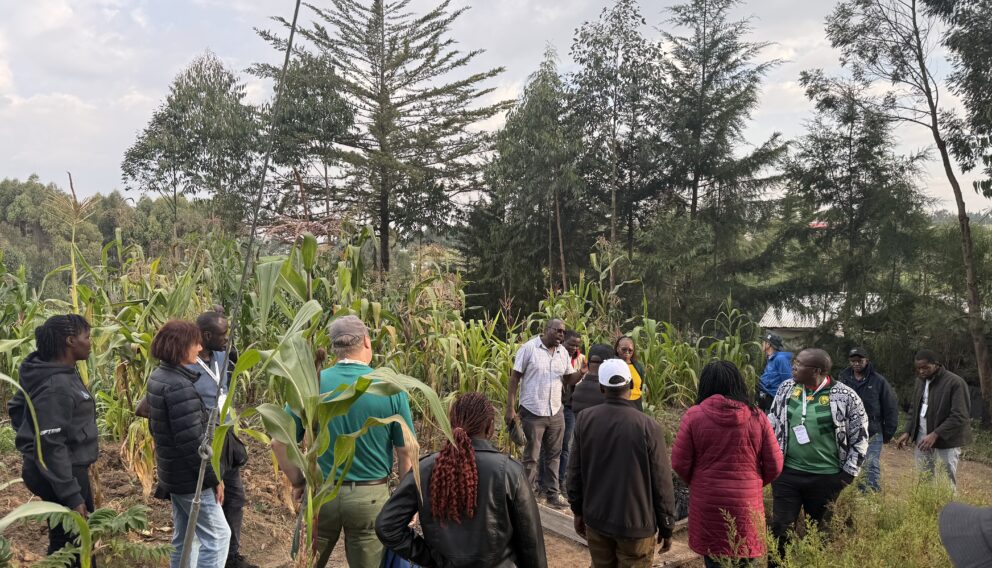
In late July 2026, researchers from the University of Eastern Finland (UEF) School of Forest Sciences and the Natural Resources Institute Finland (LUKE) travelled to Nairobi for the IUFRO Small-Scale Forestry and Forest History and Traditional Knowledge Joint Conference, hosted by the Kenya Forestry Research Institute (KEFRI) at its headquarters in Muguga. Three days of presentations and field visits brought together researchers, practitioners, policymakers and community representatives from across the world under the theme “The Supply of Forest Products and Services from Small-Scale Forests, Agroforestry, Farms, and Community Lands”.
Text and photos by Dr Philip Chambers
Opening the conference, Principal Secretary for Forestry Mr Gitonga Mugambi set a challenge that echoed through the following days: the conservation agenda, he argued, must mean something to communities, creating industries and jobs while protecting the environment.
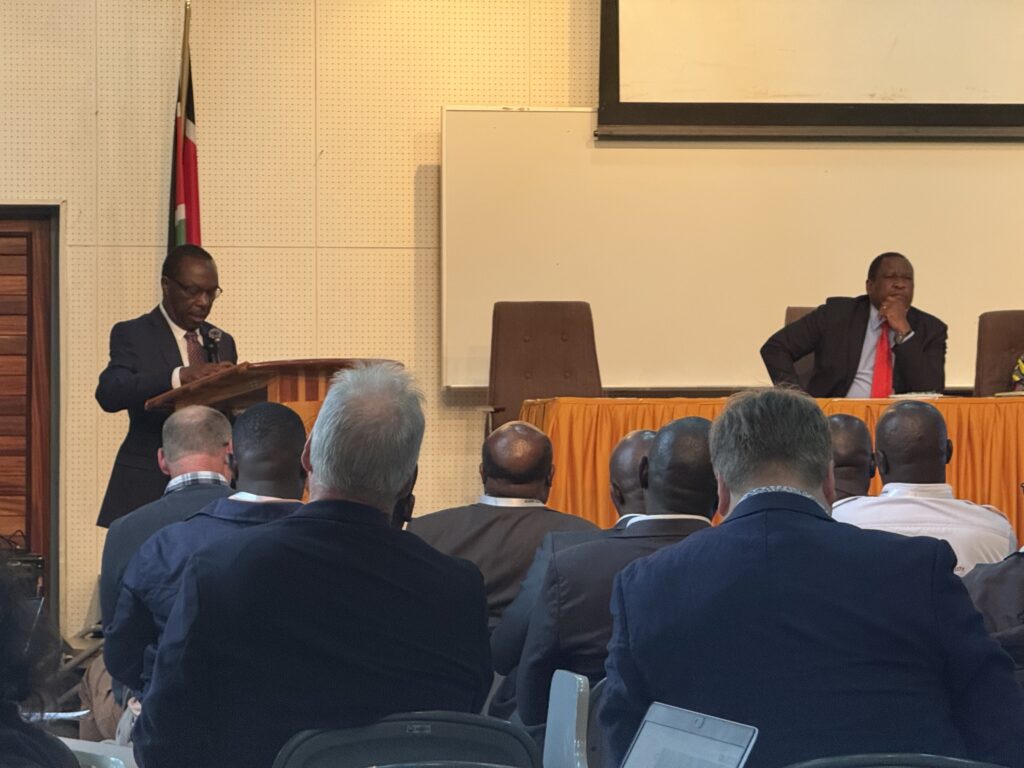
Principal Secretary for Forestry Gitonga Mugambi addresses the conference at KEFRI headquarters in Muguga.
A common thread
If there was one word that threaded through the whole week, it was passion. We heard it from farmers in the Aberdare foothills and from farmers in the drylands around Kitui, from people working a few hectares and from people who had built substantial businesses out of very little.
The challenges are real enough, and often quite different from ours. But almost nobody we met framed things that way. They talked instead about what they were doing, and what they were going to try next, and they thought well beyond the boundaries of their own land: about their neighbours, about the forest, about the planet.
Finnish research in Nairobi
Three researchers travelled from Finland. Prof. Teppo Hujala (UEF) presented on how forest advisory systems function across Europe and where their development needs lie. Mikko Kurttila of LUKE discussed the FOREST Partnership Strategic Research and Innovation Agenda from a small-scale forest ownership perspective.
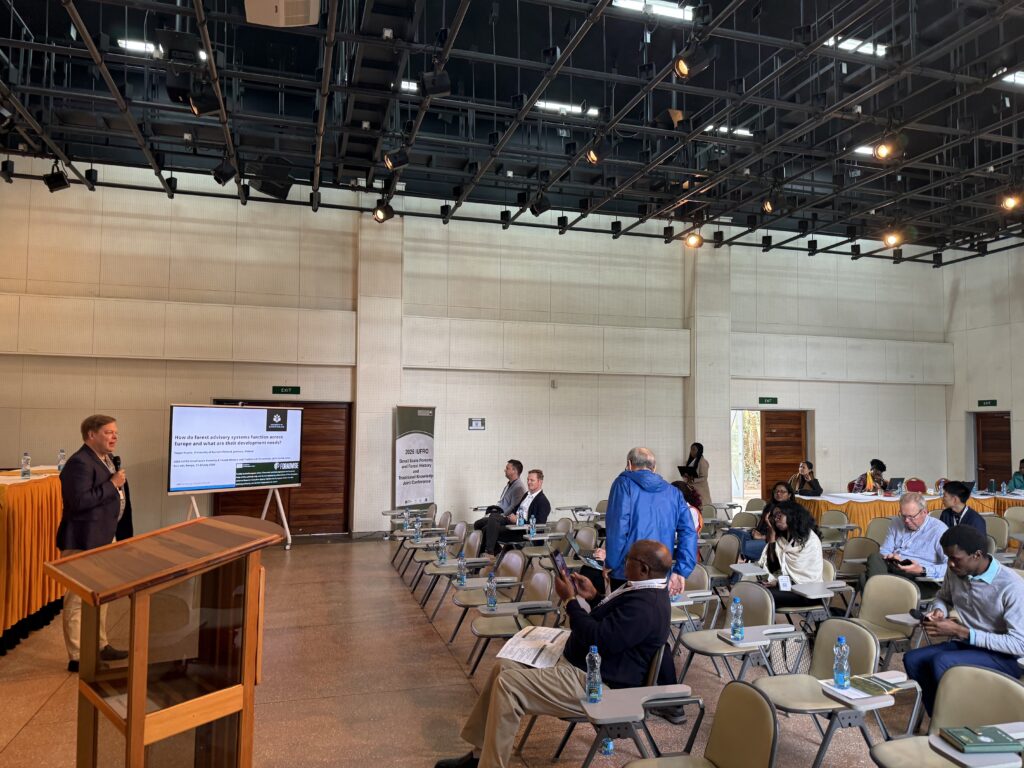
Teppo Hujala presents on the development of forest advisory systems across Europe.
For my own part, I was there to present on the PELITUKI project, part of the UNITE Flagship on forest–human–machine interplay. Together with LUKE, the Gamification Group at Tampere University, MTK and the Finnish Forest Owners’ Associations, we are asking whether gamification can improve forest owner engagement with digital advisory platforms. In Finland, 630,000 owners hold about 60% of the forest area, and many have little formal training in managing it. Digital tools have proliferated, but they tend to be framed in technical terms for people who already have forestry knowledge. We offered forest owners an online course on forest damage through MTK’s OmaMetsä service, in standard and gamified versions, and the early results suggest the gamified versions did more to strengthen owners’ confidence in their own judgement.
I also gave a short talk on the IUFRO Task Force on Gender Equity, Diversity and Inclusion in Forest-related Sectors (ForGEDI), which has 82 members across six continents and a free online course now reaching learners in more than 45 countries.
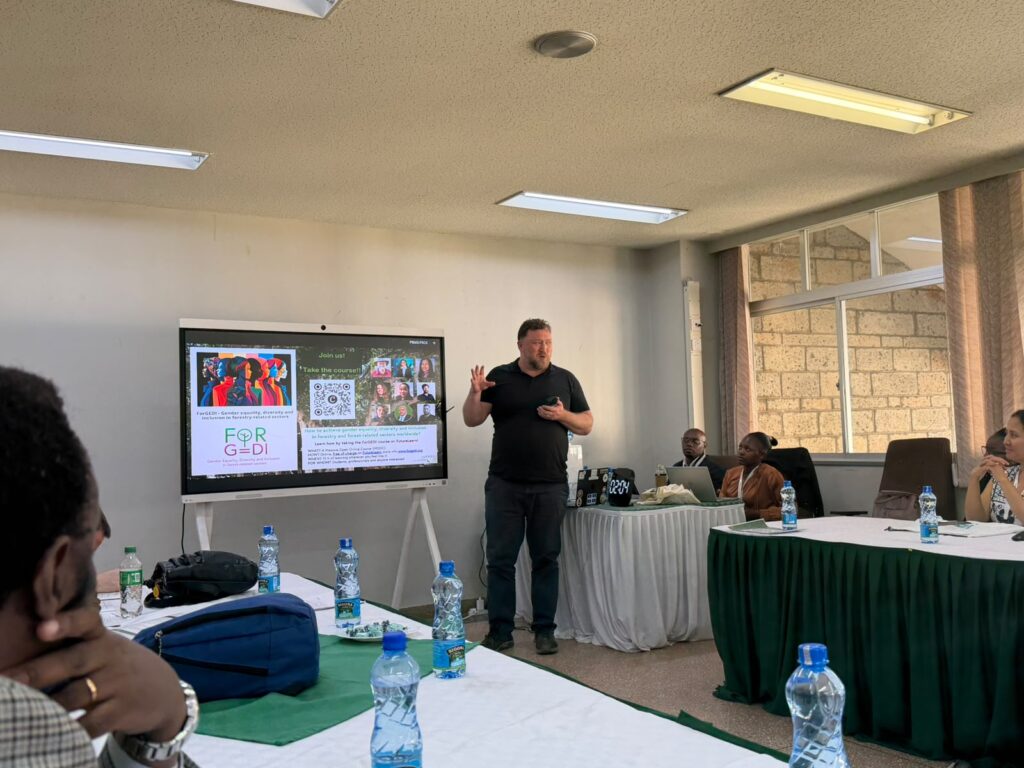
Philip Chambers introduces the work of the IUFRO ForGEDI Task Force and its free online course.
Small-scale forestry in practice
The Wednesday field tour visited three sites northwest of Nairobi, and we began to see how Kenya’s smallholder timber economy actually works.
Kijabe Environment Volunteers (KENVO) is a community-based organisation working at the edge of the Kikuyu Escarpment Forest about 30 km from Nairobi. It began twenty years ago as a youth-led environmental group. It has developed into an organisation that targets illegal charcoal production sites deep within the forest and, more importantly, collaborates with nearby farming communities to build their capacity and provide sustainable alternatives to the activities that previously made illegal logging economically appealing.
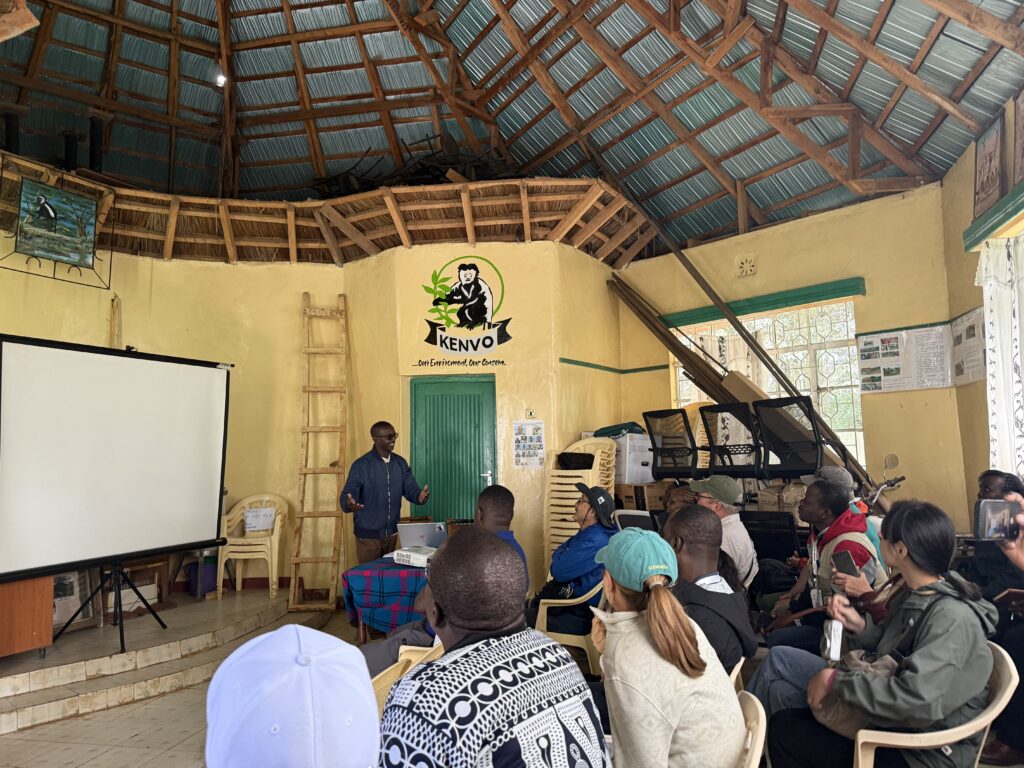
Conference participants learn about KENVO’s work with communities around the Kikuyu Escarpment Forest.
One farmer there keeps two cows whose manure feeds a biogas digester producing enough gas for over two hours of cooking a day. She described it modestly, and on its own it is small. But multiplied across a community, it is precisely the intervention that weakens demand for charcoal, which has historically driven illicit logging in the nearby protected forest. Enforcement matters. So does making the illegal option unnecessary.
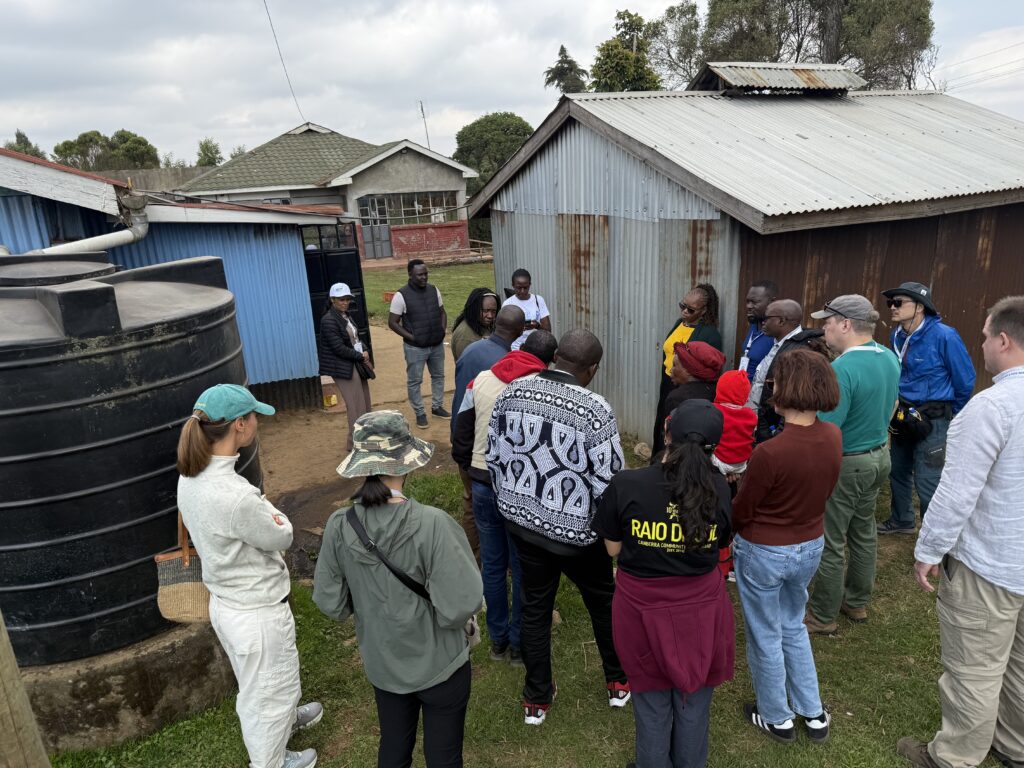
Conference participants visit a smallholder farm where cattle manure is used to produce biogas for cooking.
The next stop was a sawmill that sources timber from local growers. Kenya imports a significant share of its timber, and the miller expressed a preference for purchasing locally. However, he explained that this is challenging due to barriers such as an earlier multi-year ban on harvesting from state forests, which has constrained domestic timber supply.
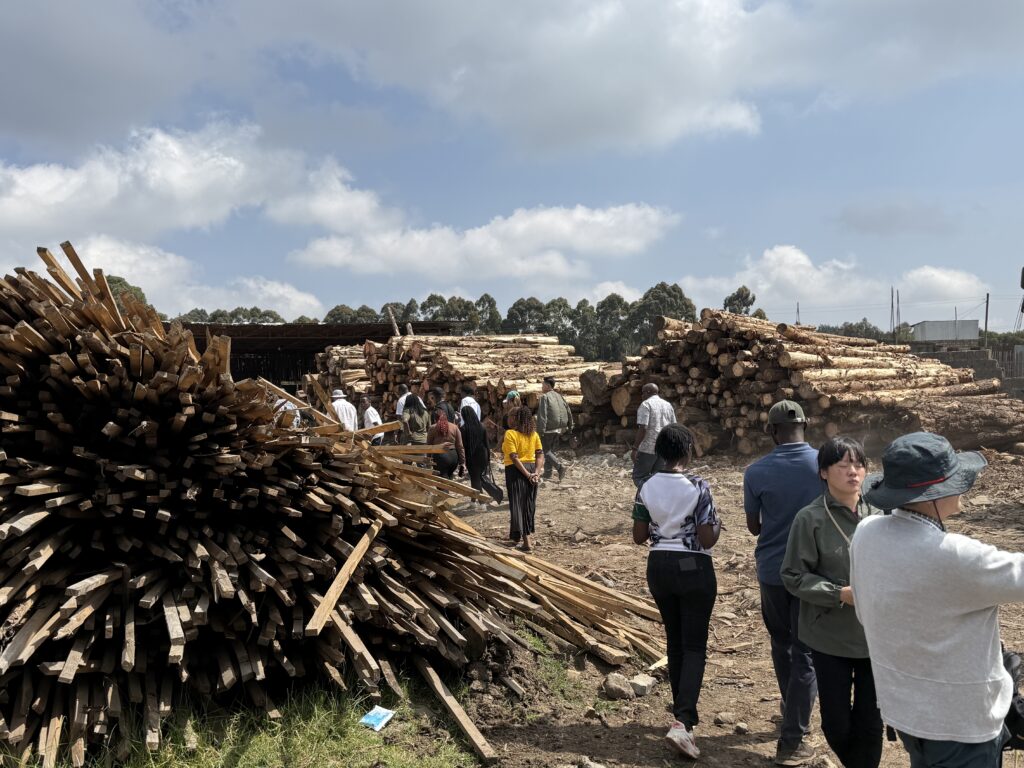
A local sawmill processing timber sourced from Kenyan growers.
Outside Engineer town, the group visited a farmer in the Tree Growers Association of Nyandarua (TGAN), a network of smallholders engaged in commercial forestry and farm-tree integration. He grows fruit trees, manages a woodlot with commercial timber species, and runs a tree nursery. The TGAN representative emphasised the need for smallholders to organise, train and speak with a unified voice, and to be acknowledged as contributors to domestic supply with appropriate support.
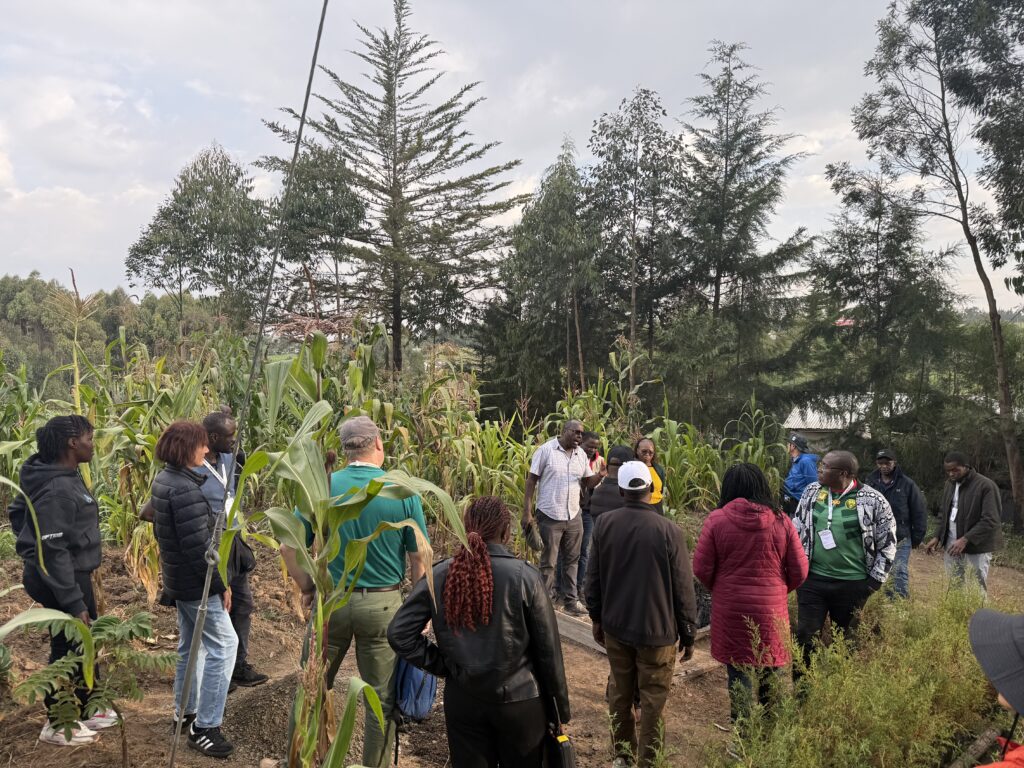
Conference participants visit a smallholder farm near Engineer, where commercial forestry is integrated with food production.
Two farmers and a tree
The post-conference tour headed southeast into the drylands of Kibwezi and Kitui, where the challenges are different again: heat, unreliable rainfall, termites.
There we met two elderly farmers whose farms and knowledge had developed over decades. One had been a forerunner in planting Melia volkensii, a local dryland tree now spoken of as something close to a golden crop. Managed well, it can produce large stems in around 25 years, and its timber is termite-resistant, which in that environment is no small virtue. Additionally, the seed casings, inedible to people, are nutritious for goats.
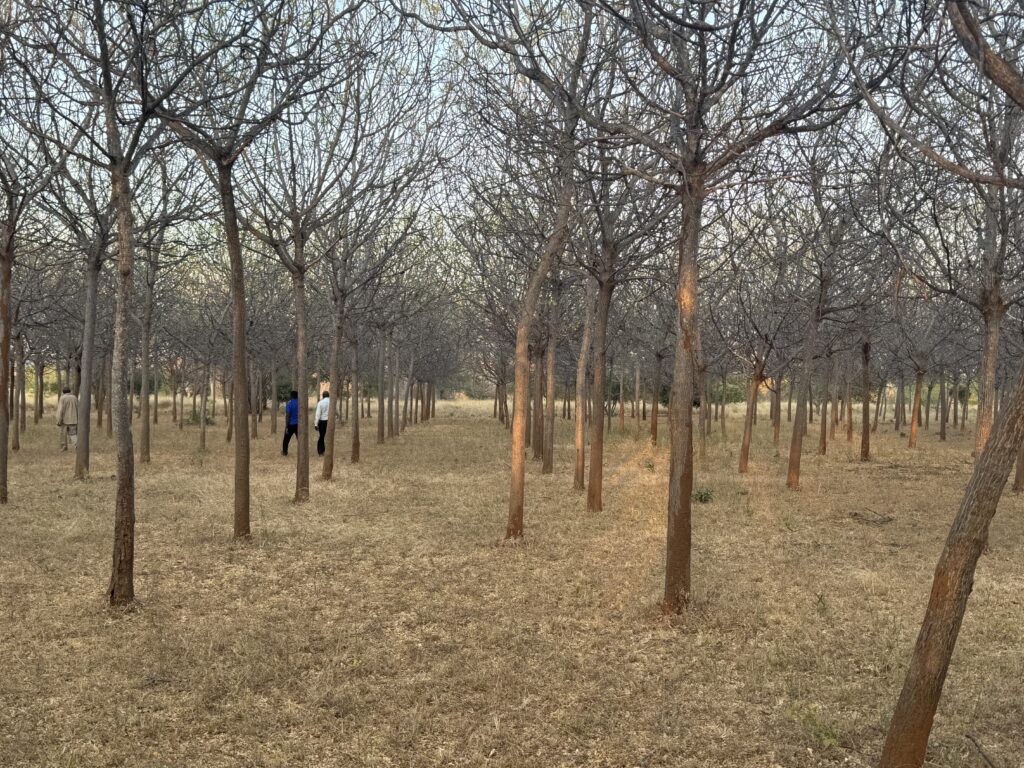
A stand of Melia volkensii, a valuable native timber species adapted to Kenya’s drylands.
The second farmer took a different route, building a holding of considerable diversity, with cashew, one of his earliest successes, alongside a wide range of other tree and fruit species. In these dry areas, water is the binding constraint, and much of what he developed focused on capturing and holding it. Rainwater was collected and held in a storage tower, then distributed by drip irrigation to the crops that needed it most at a given point in the season.
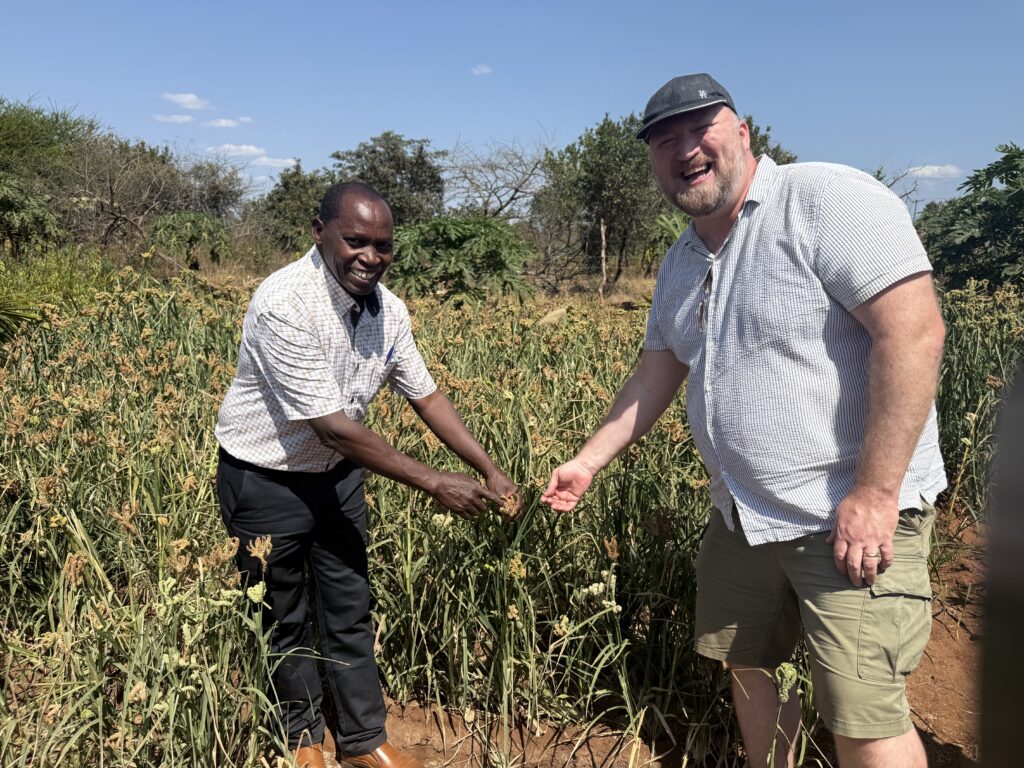
Philip Chambers with one of the farmers visited in Kitui, examining crops on a farm developed over decades of experimentation.
Both farmers had worked with KEFRI over many years, seeking out training and testing what they learned on their own land. The confidence they now had in their own judgement had been built slowly, and it was hard-won.
Implications for digital forest advisory research in Finland and Kenya
Smartphone use in Kenya is high, and mobile payments are central to the national economy to an extent beyond what they are in Finland. Familiarity with mobile technology in everyday life removes one barrier that commonly limits digital forestry extension services. TGAN, among others, expressed an interest in delivering education and capacity building directly to their members, and the mobile route would be an obvious contender.
The content of the PELITUKI course on forest damages may not transfer directly, as it covers Finnish forest damages, ownership structures, and advisory systems, but the general gamification approach and design principles might.
Story-led learning modules built around genuinely local needs seem not just feasible but wanted. Some of the underlying challenges small-scale forestry actors face are similar in Finland and Kenya, and many of the solutions we are looking at in Finland may also apply there. One of the main questions is how you motivate someone to act, how you build confidence rather than simply deliver information, and how you reach owners who aren’t already engaged. That’s where gamification research might contribute, and it’s certainly a conversation worth continuing.
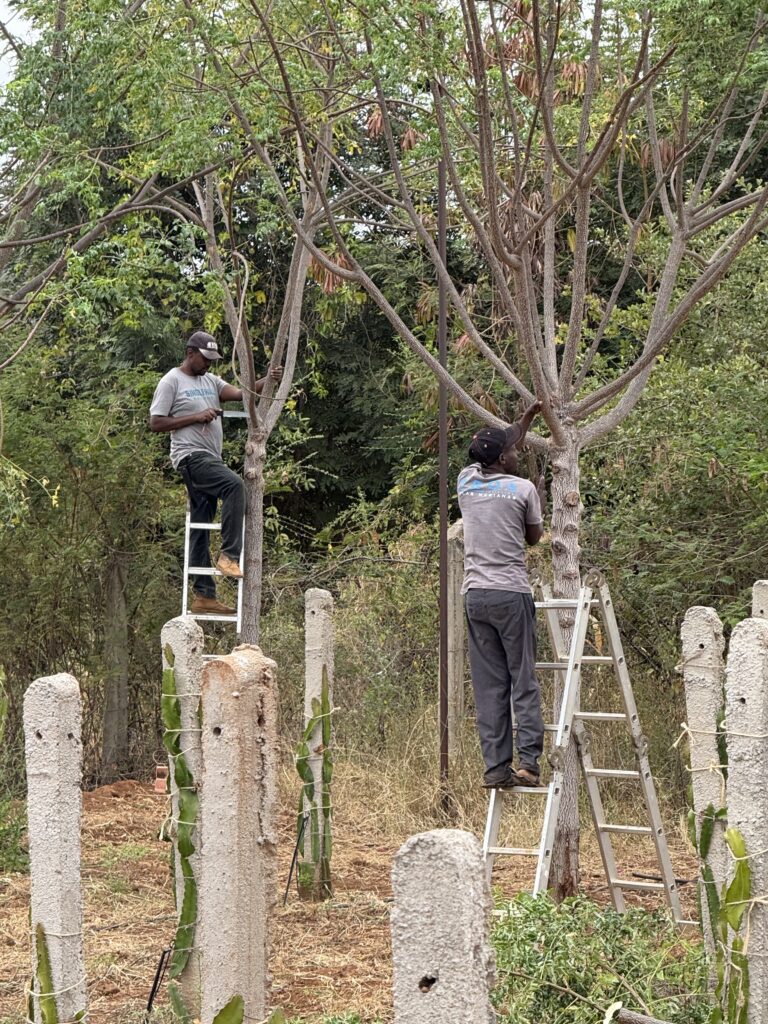
Workers prune moringa trees planted alongside a dragon fruit plantation at the KEFRI field station west of Kitui.
Towards Nairobi 2029
The IUFRO World Congress comes to Nairobi in August 2029, and this conference was consciously a first step towards it. KEFRI is well advanced in its preparations, and participants heard updates on the plans.
One strand of that preparation is the ForGEDI photo competition, recently accepted by the Congress organisers, which will run in the lead-up to 2029. We introduced it before the conference closing remarks, and it drew interest from participants. Details will appear at forgedi.org in due course.
The post-conference tour closed with a visit to the Maasai Mara. Before returning to Nairobi, the KEFRI organisers presented Teppo Hujala with a shúkà, the traditional Maasai cloth, in recognition of his work as Deputy Coordinator of the IUFRO Small-Scale Forestry Research Group and his role in coordinating the conference.
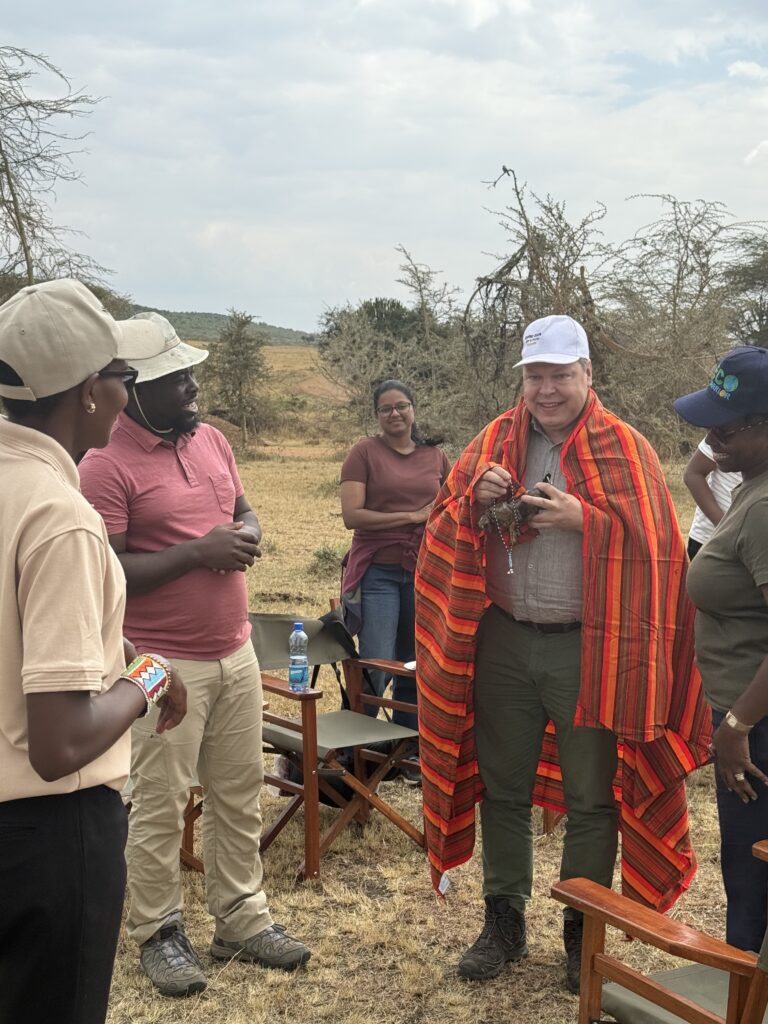
Teppo Hujala receives a traditional Maasai shúkà from the KEFRI organisers at the close of the post-conference tour.
Thanks are due to the KEFRI team, and to the organising and scientific committees, for a well-run conference and generous hospitality.
Metsämiesten Säätiö
Metsämiesten Säätiö on tunnistanut tämän hankkeen rahoittamisen arvoiseksi. Lahjoituksilla Säätiö kasvattaa apurahojen määrää metsäalan hyväksi. Sota-ajan savottajätkien muonahuollosta alkunsa saanut Säätiö kunnioittaa historiaansa nimellään ja tasa-arvoisella toiminnalla. Lisätietoja www.mmsaatio.fi
Metsämiesten Säätiö judged this project worth funding. Through donations, the Foundation increases the number of grants available for the benefit of the forest sector. Founded from the wartime provisioning of logging crews, the Foundation honours its history through its name and its commitment to equality.
More about Metsämiesten Säätiö and its work: https://youtu.be/B2trv2dluZU (3 min 22 s)
This research is part of the UNITE Flagship, funded by the Research Council of Finland.
