
A Reflection on the FUTE Mobility at the University of Eastern Finland
By David Immanuel and Moses Naftali
Application, Selection, and Transit Logistics
First and foremost, our participation in the FUTE mobility program originated during our school-based teaching practice in April 2026. Despite initial hesitations, we submitted the required documentation and underwent a rigorous selection interview at UNAM’s Hifikepunye Pohamba Campus. Following our selection, academic coordinators including Dr. Naukushu, Dr. Anyolo, Prof. Iipinge, Ms. Amakali and Ms. Ndakalako have provided administrative guidance, travel briefings, and support for visa and passport processing.
On Tuesday evening, August 4, 2026, we departed Ongwediva aboard a City Link intercity bus and travelled south through Ondangwa, Omuthiya, Oshivelo, Tsumeb, and Otjiwarongo, arriving at the City Link depot in Windhoek around 05:00 AM the following morning. Upon arriving to the airport, we completed currency exchange into Euros, checked in our baggage, and navigated border control security procedures. Due to a flight rescheduling, our departure was delayed and we were forced to wait for a long period of time.
Upon arrival in Helsinki, we collected our luggage and acquired local SIM cards. Dr. Jatileni pre-arranged and finalized our accommodation at Vantaa. Upon arrival via taxi, a local resident assisted us with the electronic entry system since we were struggling to navigate through the opening of the main entrance. Despite we succeeded in locating our room, we noticed all shops nearby were closed and we make use of restaurant near us and bought sandwich that cost 9 Euros each. The sandwich was so delicious, and we slept peaceful in white bedded sheet with well-ventilated facilities. This was a peaceful experience we had.
On the morning of August 7, 2026, facing a tight schedule for our 07:00 train departure from Tikkurila Station, a local resident offered us assistance free of charge and drove us directly to the Train station with his electric vehicle. Overall, if it was not him, we would have missed the train since it was still difficult to navigate the train station procedures, but this Samaritan really helped us and show us everything. The 4-hour train journey to Joensuu highlighted the efficiency, cleanliness, and passenger-oriented infrastructure of Finnish rail transit. Upon our arrival Dr. Jatileni met us at Joensuu train station and guided us to get started in Joensuu.
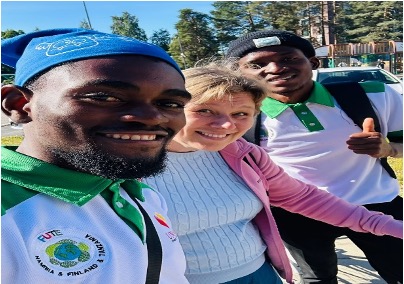
Picture 1. Us meeting Prof. Sari for the first time.
Academic Modules and Practical Training
During our FUTE student exchange at UEF, we experienced an advanced, student-centered educational setting that seamlessly bridges theory and real-world application. Learning begins in the classroom, where theoretical concepts are immediately put into practice through interactive games, visual demonstrations, presentations and group work using collaborative approaches. This learning experience is extended beyond the classroom through visits to local companies, giving students firsthand insight into real-world practices. Furthermore, because the UEF campus is uniquely integrated alongside primary and secondary teacher-training schools, you can see these principles in action at every level starting from lower grades where children are introduced early to practical skills like woodwork and crafting to help them discover their talents from the start.
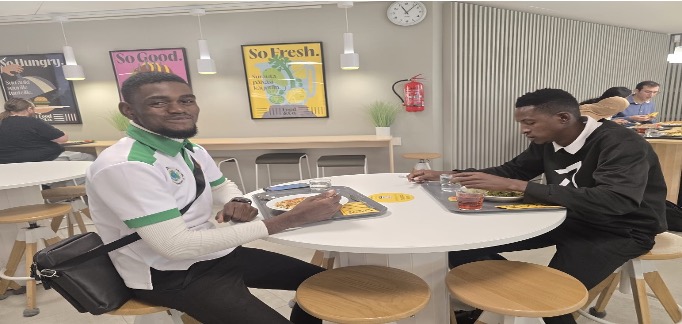
Picture 2. Us having lunch at the university cafeteria.
Industrial Robotics and Automated Systems
This course integrated morning theoretical lectures (09:00–12:00) with afternoon practical laboratory sessions (13:30–16:00), led by Professor Ilkka and Master’s degree tutors such as Harry and many more. We explored the history and application of Programmable Logic Controllers (PLCs) & Automation. Using simulation platforms like Factory I/O, we modeled automated manufacturing workflows, conveyor belt systems, object-rolling logic, and temperature sensors. In the Humea Lab, we studied system adaptation through Proportional-Integral-Derivative (PID) feedback loops and mechanical Degrees of Freedom (DOF)—analyzing how 7-DOF mechanical structures mirror human arm kinematics. On our final laboratory day, we engaged with ROS middleware, setting up Ubuntu Linux environments, Turtlesim nodes, Gazebo 3D simulation tools, and UTM virtual machines to model mobile robot kinematics and camera algorithms safely. On August 13, 2026, we visited Outokumpu Metalli Oy, observing heavy industrial automation in real time, including automated robotic welding, material transport, and packaging systems. Despite initial challenges with advanced matrix mathematics, Python coding, and managing digital coursework without personal laptop, active engagement in the lab enabled us to master these core STEM concepts.
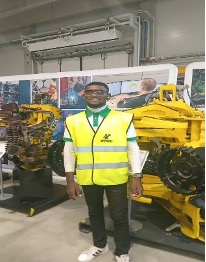
Picture 3. Some robots used for welding metals.
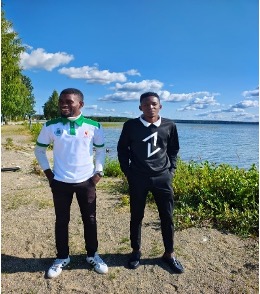
Picture 4. When we came back from the company we passed through one lake and rested there for pictures and to have coffee.
Existential Wellbeing and Health
This module focused on human flourishing, existential health, and holistic education alongside an international student cohort from Croatia, Norway, Hungary, Nigeria, and Germany. In this course we explored Theoretical Frameworks of Wellbeing, Generative AI in Modern Pedagogy, and did Community Field Research. Following a morning cultural workshop at a local bakery where we learned the traditional crafting of Karelian pastries (karjalanpiirakka), we conducted qualitative field interviews with senior citizens at the City Market to evaluate social connection and late-life wellbeing in Finnish society.
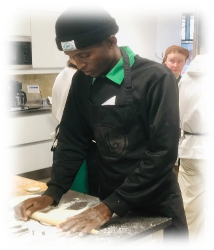
Picture 5. At Martat workshop.
Education for Sustainable Development (ESD) & Environmental Fieldwork
Classes on August 24 and 25 focused on ecosystem dynamics. Ms. Ella provided live translation from Finnish, covering abiotic and biotic ecological factors. Following a session on animal classification and insect food chains (ravintoketju) led by Teacher Miikka, we conducted soil acidity testing in the laboratory with instructor Manta using field-collected samples. The next day, Ms. Ella and Dr. Cloneria escorted us to Onkilampi for hands-on ecological studies. We executed water quality comparison experiments across different lake sources and studied local flora, including forest blueberry species.
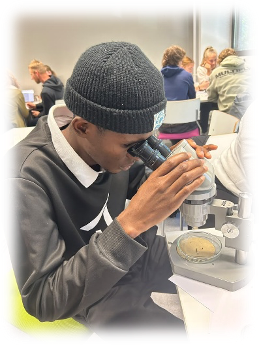
Picture 6. Conducting experiments.
Cultural Excursions and Community Engagement
- African Marketing Day & Sports Engagement: We participated in the African Marketing Day at the City Market, engaging with international African students studying at UEF. Through new connections, including a peer named Joshua from South Sudan, we participated in recreational football matches at the Mehtimäki sports venue.
- Botania Joensuu: Located near the Futura building, we toured the Botania botanical gardens, observing tropical greenhouse ecosystems, diverse butterfly species, desert plant collection areas, and aquatic habitats.
- Fish Lake & Traditional Kota Experience: We cycled to a nearby lake, gathering inside a traditional Finnish kota (wooden fire hut). Alongside lecturers and international peers, we prepared food over an open hearth, observed regional watercraft, and engaged in informal cross-cultural dialogue. Actual We have enjoyed the view of the lake and later we roasted some sausages inside the fire room till around 8pm.
- Koli National Park Expedition: We travelled to Koli National Park, hiking to the mountain summit overlooking Lake Pielinen. After descending to the shoreline facilities, we returned via the open-air chairlift gaining an aerial perspective of the conserved forest landscape. We were also struggling to walk to the mountain since it was too long up high. Our tour guide showed us everything and explained everything well. We also managed to see a forest near the Koli mountain and the lake that is more than 300 meters deep. We were informed that cultural people that were accused of witchcraft were always flown down from top mountain toward the forest and it noticed no bones seemed to be present when you go down to see the thrown person. We were also privileged to taste some blue berries for the first time. It was indeed a wonderful experience to be in Koli despite it being tiring up there.
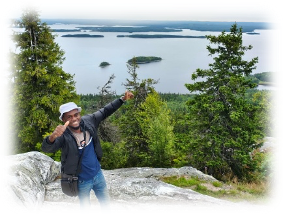
Picture 7. The view of Koli from the mountain.
Return Journey and Final Reflections
On Friday, August 28, 2026, we returned our loaner bicycles expressing our gratitude to Mr. Malakia and Dr. Cloneria for providing local transportation throughout the mobility. On Saturday morning, Ms. Ella escorted us to Joensuu station. We travelled by train to Tikkurila and transferred to the Helsinki Airport.
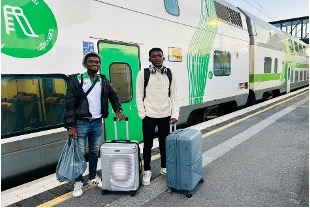
Picture 8. Going home.
Upon landing in Windhoek, UNAM Main Campus representatives facilitated our transfer to the intercity bus terminal. We boarded the City Link bus to northern Namibia, arriving in Ongwediva at 05:00 the following morning, where my family met us to complete the journey.
The FUTE exchange mobility at the University of Eastern Finland has significantly enhanced our academic trajectory. By combining technical training in industrial automation and robotics with human-centered existential health and Education for Sustainable Development, this experience has equipped us with global perspectives and innovative pedagogical tools. We extend our sincere gratitude to UNAM and UEF, to the FUTE project, and all participating faculty for making this transformative educational opportunity possible.