
Science in Motion: How Movement Research Supports Health and Rehabilitation
Science rarely moves forward in isolation. Conferences remind us that behind every dataset, method and publication is a community of people exchanging ideas and asking questions they don’t know answers to.
Conferences are important opportunities to present your work, get inspiration and feedback, and, more importantly, network. Networking and discussions with other researchers and practitioners in the field are important for developing expertise and advancing our team’s work. Seeing and hearing about others’ work sparks ideas and conversations within our group, which helps clarify our goals and could also spark collaborations.
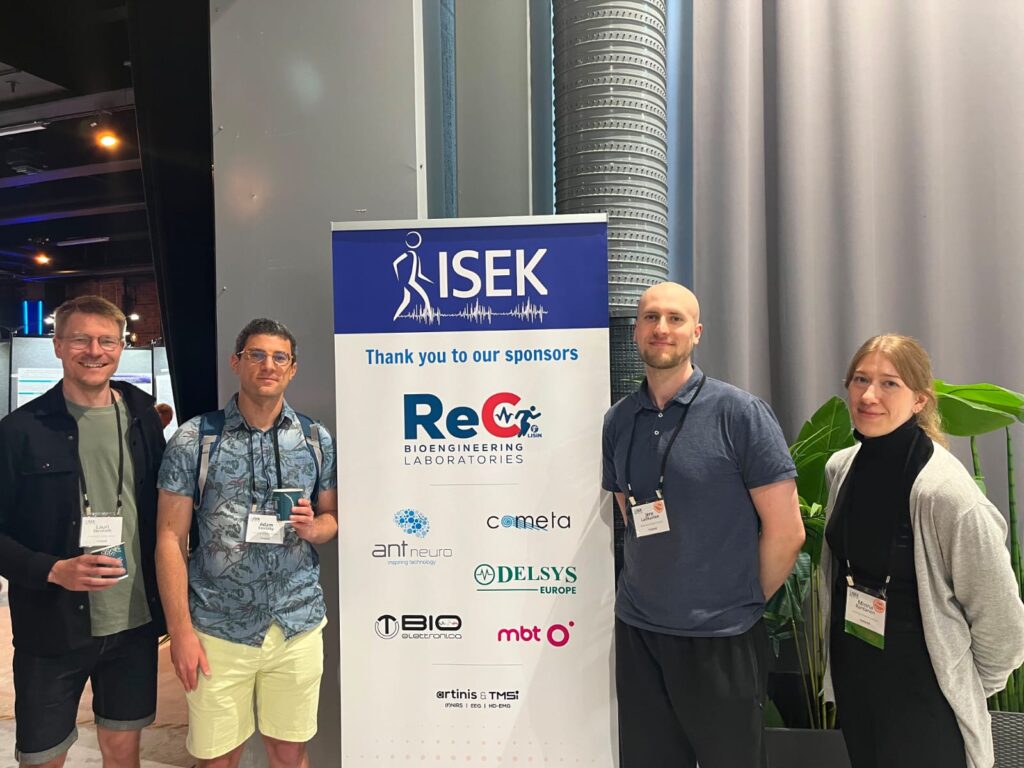
This post presents our experiences from two international conferences: the International Society of Electrophysiology and Kinesiology (ISEK) held in Jyväskylä (Finland) June 2026 and the Annual Meeting of the European Society for Movement Analysis in Adults and Children (ESMAC) 2026, which took place as a joint effort in two cities, Maastricht (The Netherlands) and Hasselt (Belgium).
Understanding Movement, Muscles and the Nervous System
The focus of the ISEK conference was on understanding human movement and muscle and nervous system activity using modern measurement methods such as EMG, EEG, and wearable technologies. The congress highlighted how smart technologies can help researchers and professionals analyze movement, performance, health, and behavior more effectively.
Our research group gave presentations on topics including whether distal-to-proximal redistribution in joint mechanics is a significant determinant of the metabolic cost of walking in older adults and estimating medial knee contact force during walking using a single video camera. In addition, we presented posters on the use of a single motion-capture marker to estimate knee moments in real-time applications, and on whether vertical ground reaction forces can serve as a surrogate measure for monitoring knee joint loading during gait in individuals recovering from knee injury.
Throughout the conference, we heard interesting presentations on topics of biomechanics, modeling and signal processing, HD-EMG technologies, assessment of muscle function and performance, rehabilitation, and AI. Topics heard included how the brain controls balance, how this knowledge can help develop rehabilitation robots, how neurological diseases can be detected early, how the brain works during movement, and how aging and exercise affect muscles. Together, the presentations highlighted the importance of understanding interactions among the nervous system, muscles, and emerging technologies for promoting health, rehabilitation, and performance.
Motion Analysis from Lab to Clinic
The focus of the ESMAC meeting was more specifically on motion analysis in clinical settings and on how movement data can support decision-making in rehabilitation, orthopedics, pediatrics and neurological care. The meeting highlighted the value of gait and movement analysis in understanding not only body structure, but also how people actually move, load their joints and use compensatory strategies in daily function, reminding us that clinical decisions should be informed not only by imaging, but also by functional movement data and research evidence.
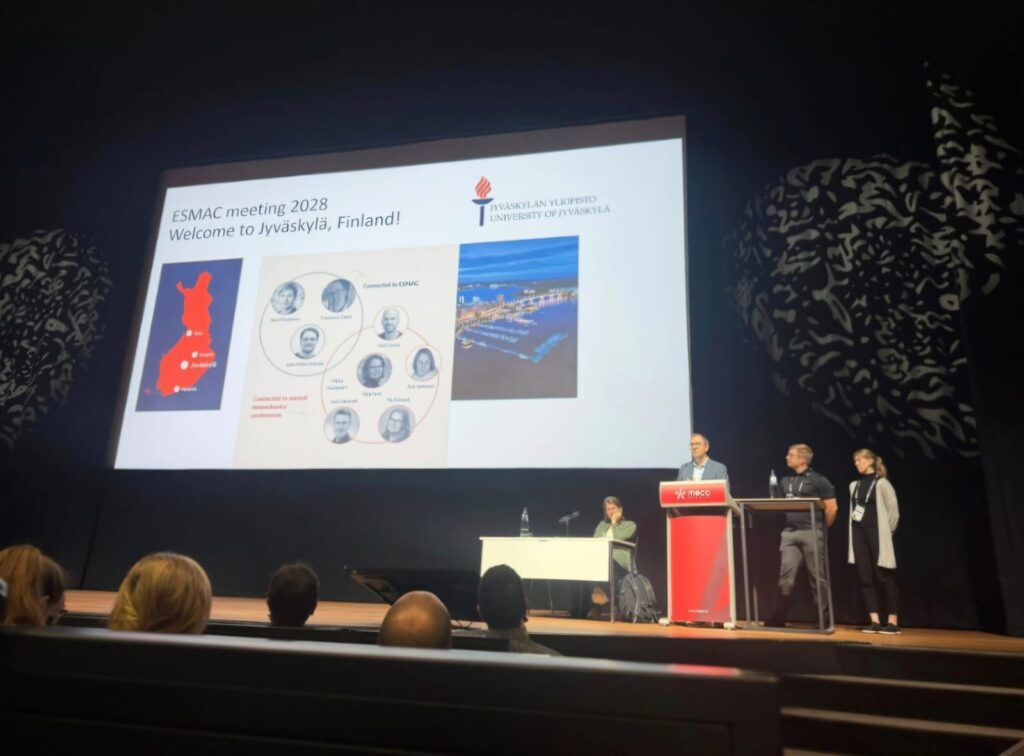
Throughout the meeting, we heard interesting presentations on clinical gait analysis, 3D movement analysis, musculoskeletal modeling, markerless and wearable technologies, and treatment outcomes. Topics included how motion analysis can support treatment planning, why compensatory movement patterns may return after surgery, how more accessible technologies could bring movement analysis beyond specialized laboratories, and why more inclusive biomechanical models, such as female musculoskeletal models, are needed. Together, the presentations highlighted how movement science connects research, technology and clinical practice to improve understanding of movement and support health and rehabilitation. It was especially exciting to be part of the official announcement that the 2028 ESMAC meeting will be held in Finland for the first time.
At their best, conferences are not just presentations and posters, but places where new questions, collaboration ideas and the courage to try new approaches emerge. We returned home full of ideas – and ready to take them forward.

